Blog CIPU

Kuebebierg: Redefining Urban Development in Luxembourg’s business district Kirchberg

>

Introducing Kuebebierg, a new urban development in Luxembourg’s Kirchberg area managed by the Fonds Kirchberg, focused on creating a sustainable and inclusive community. With an emphasis on environmental responsibility, social diversity, and economic viability, Kuebebierg aims to set a benchmark for future urban projects. From promoting alternative transportation to supporting local agriculture, Kuebebierg offers a balanced approach to urban living that prioritizes harmony with nature.

Aim

The aim of the Kuebebierg project is to create a vibrant, environmentally conscious neighbourhood that promotes sustainable living, social inclusivity, and economic vitality. Through careful planning and implementation, the project seeks to establish Kuebebierg as a model for future urban developments, both locally and internationally.
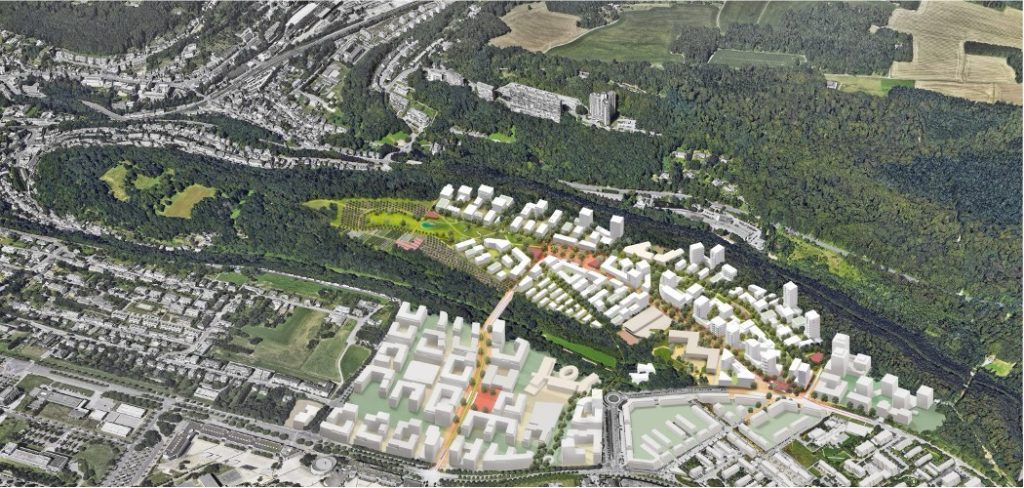
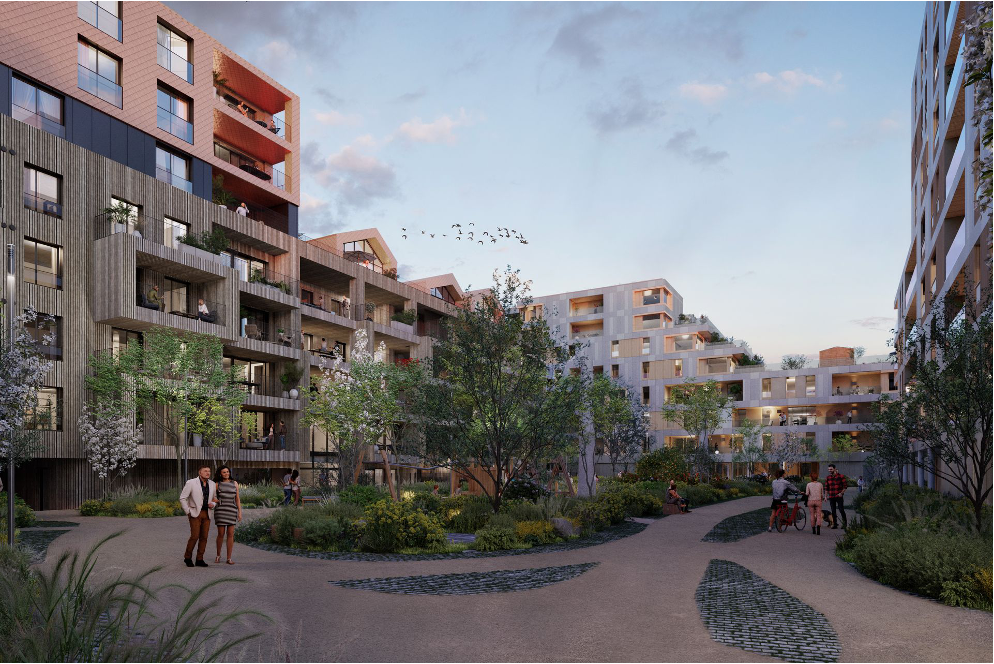
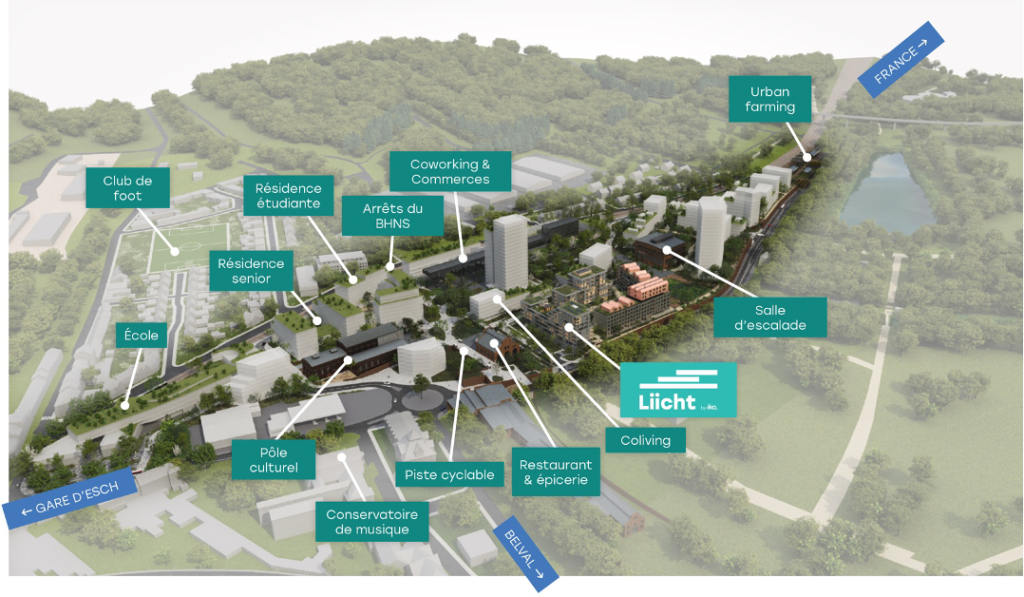
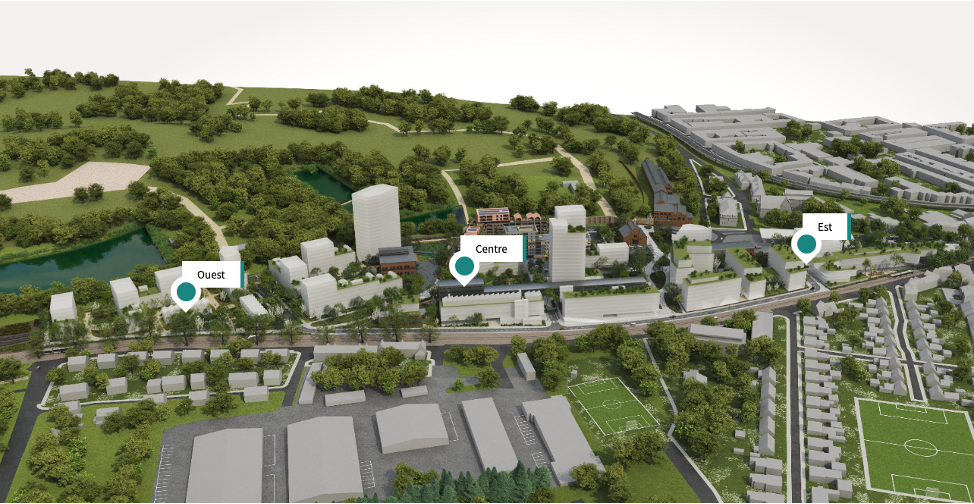
Aerial view of the planned neighbourhood (Source: Güller Güller Architecture Urbanism)

The Kirchberg quarter located on the north-eastern plateau of Luxembourg city is the vibrant business district, hosting not only banking and financial organisations but also EU institutions. The Fonds Kirchberg, established in 1961, operates under the supervision of the Minister of Mobility and Public Works and is responsible for urbanisation and development of the Kirchberg Plateau. It manages its operations and investments independently, relying on proceeds from real estate activities. Its main tasks include construction, urban development, and road infrastructure, with a current focus on building affordable housing. The Fund utilizes leasehold and other rights for land development, emphasising sustainability and community involvement in its planning processes.

The Fonds Kirchberg launched a competitive consultation process to develop an urban design charter establishing objectives for the landscape of the Kuebebierg area, a major land reserve belonging to the public organisation. The 33-ha area is located in a so-called deferred development zone (zone d’aménagement différée, or ZAD). The winning team of the consultation process presented its project in March 2022. The consortium is led by the Güller Güller Architecture Urbanism office in Rotterdam and Zurich, cooperating with Zeyen+Baumann, Atelier Alfred Peter, Etienne Ballan, Cabane Partner, RR&A, ZEFCO, Ecolor, Ville en Œuvre and Belvédère.
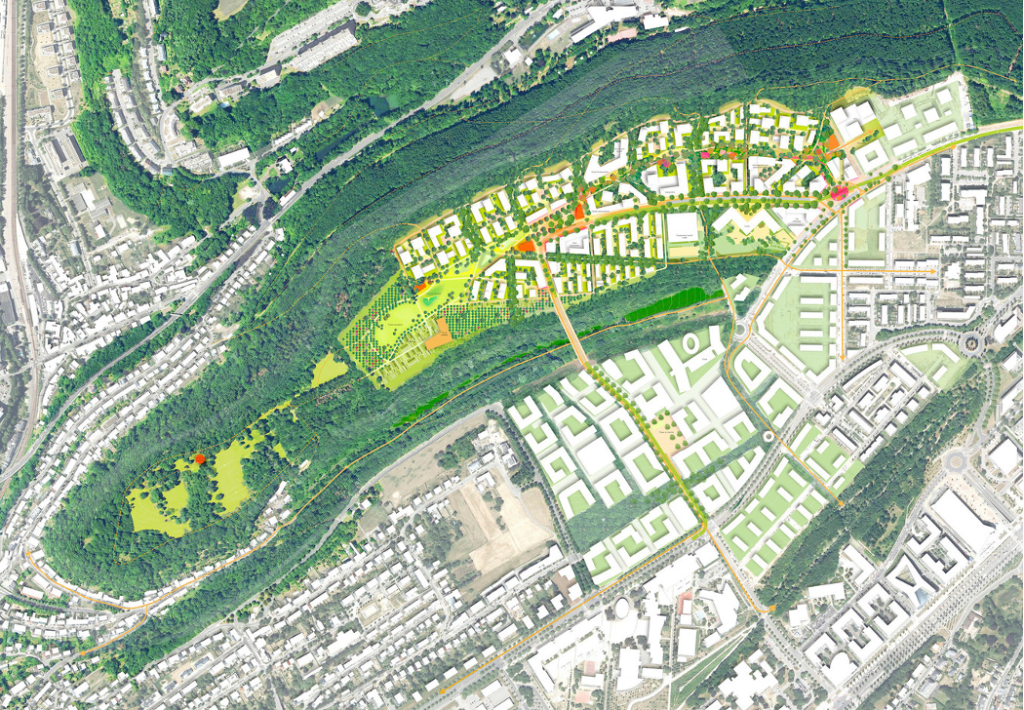
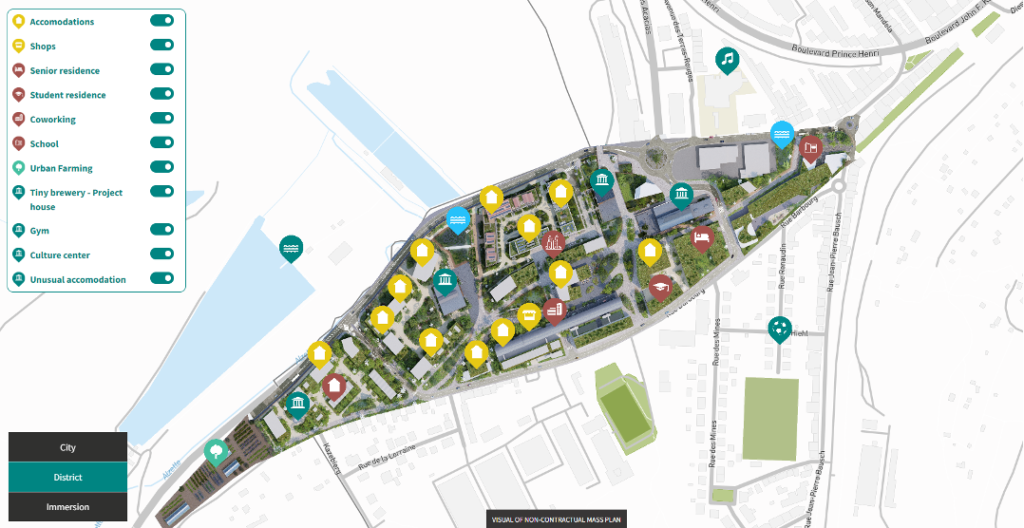
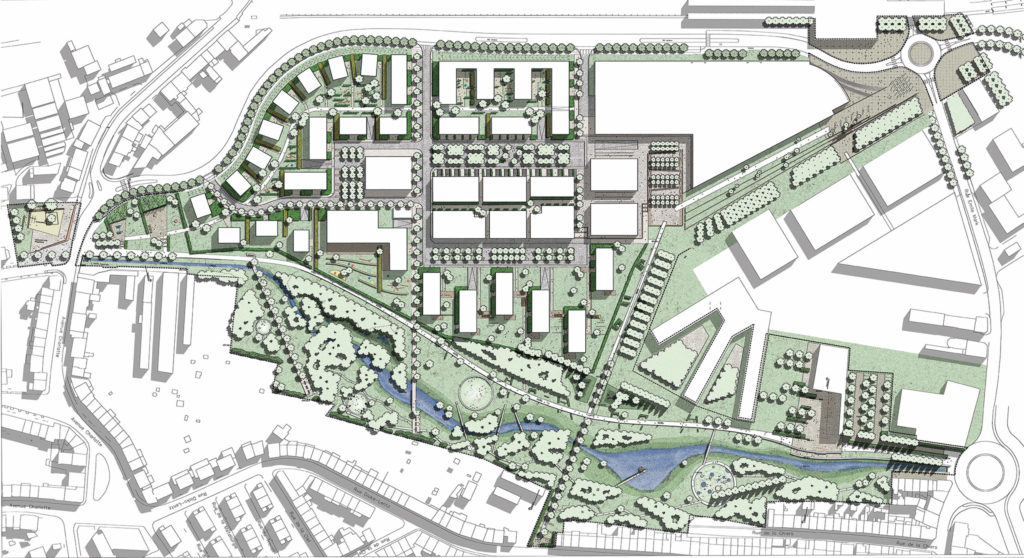
Illustrated plan of the Kubebierg neighbourhood (Source: Güller Güller Architecture Urbanism)

Activities

With its circular design and ecological focus, Kuebebierg aims to create a vibrant, liveable community that integrates seamlessly with its surroundings. Activities within the neighbourhood are guided by a holistic vision that embraces the area’s natural and urban characteristics, prioritising principles of sustainability and community well-being.

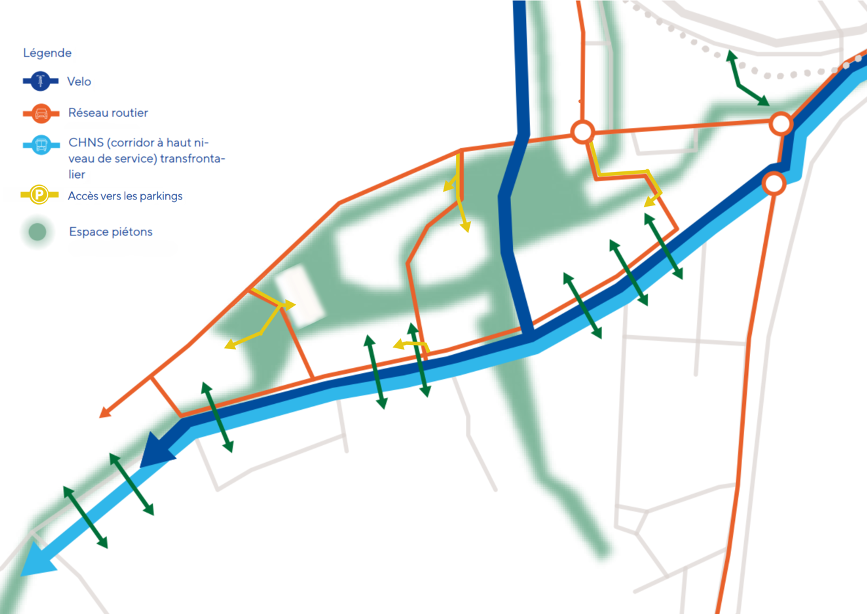
  1. Promoting Active Mobility: Kuebebierg prioritises diverse mobility options to reduce reliance on individual cars. Direct and secure routes for pedestrians and cyclists are integrated, along with the commissioning of a new tram line to enhance public transport accessibility.
  2. Limiting Car Circulation: With only one vehicle access point and a ratio of 0.5 cars per dwelling, Kuebebierg encourages a shift away from car-centric urban planning. Shared spaces accommodate various modes of transportation, fostering a safer and more vibrant urban environment.
  3. Creating Vibrant Public Spaces: The heart of Kuebebierg features a bustling square, reminiscent of traditional city centres, offering a diverse mix of shops, restaurants, and recreational amenities. These vibrant public spaces serve as focal points for social interaction and community engagement. A linear park and the tram line will connect public spaces, crossed by the spaces “Porte Frieden” and the “Place du Kuebebierg”.
  4. Maximising Renewable Energy Production: Kuebebierg embraces energy efficiency by prioritising renewable energy sources. From efficient building design to on-site energy production and storage, the district aims to minimise its carbon footprint while ensuring optimal living conditions for residents.
  5. Fostering Social Diversity: With a balanced mix of housing typologies and amenities, Kuebebierg promotes social inclusivity and diversity. Affordable housing options, coupled with accessible public services and recreational facilities, create an environment where people from all walks of life can thrive.
  6. Living circularity: the planned programme for the site, the architecture and the infrastructures are all aiming for a high standard regarding carbon footprint, local consumption and low energy demands, etc. In this context, the concept includes for example an urban farm and gardening.
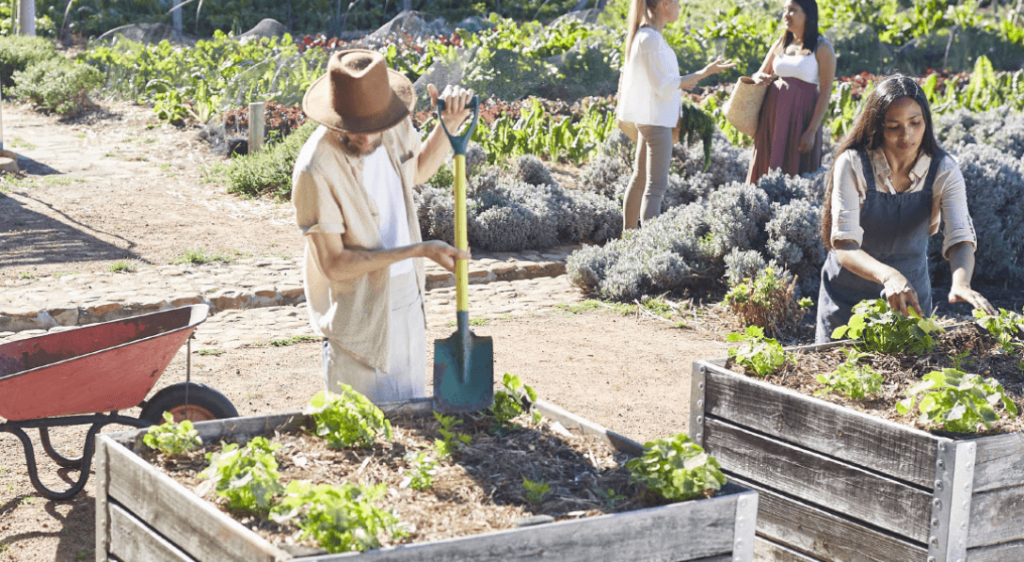
  7. Farming in the City: The city farm project aims to maintain agricultural activity on one of the last remaining sites on the Kirchberg Plateau worked by farmers. It promotes biodiversity through more extensive green space management and offers multifunctional farming activities, including grazing, market gardening, and agro-tourism, contributing to economic, environmental, and socio-cultural services within the community.
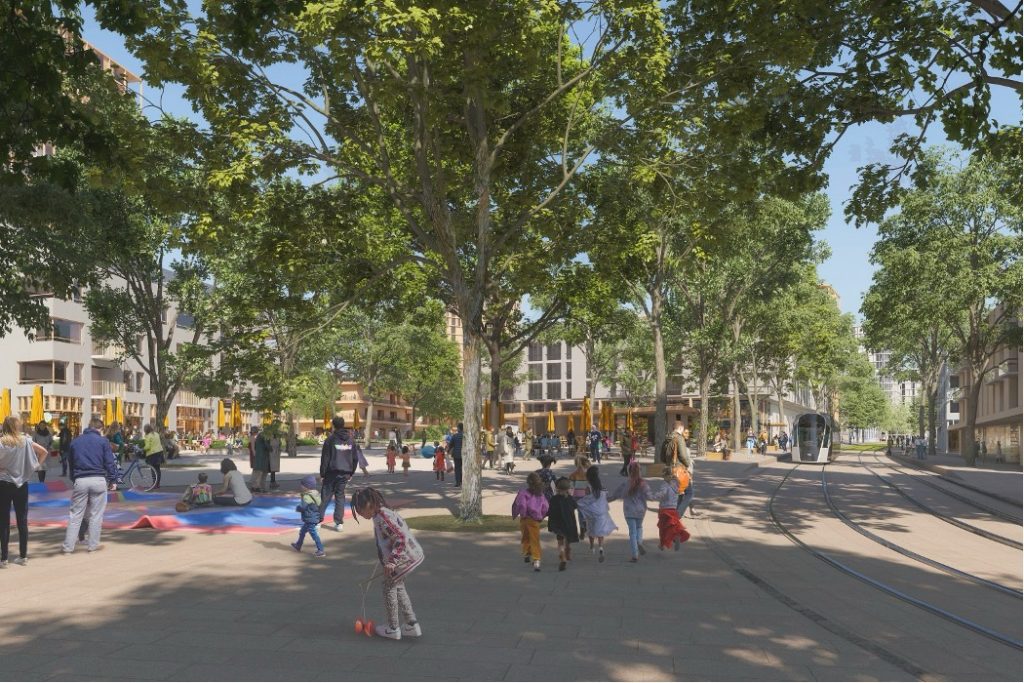
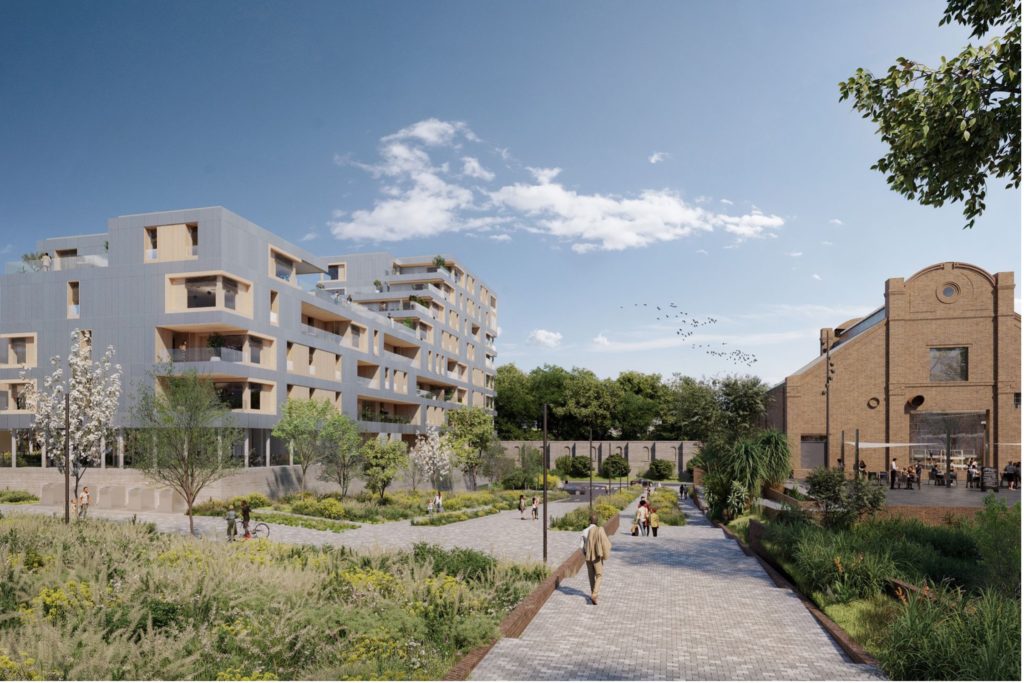
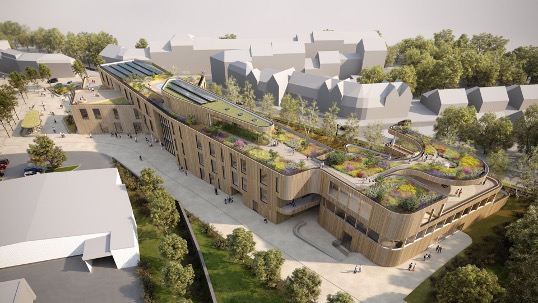
Place du Kuebebierg (Source: Güller Güller Architecture Urbanism)

Status of Implementation

The implementation of the project started in 2022. At the western tip of the district, where the city farm and orchards are also planned, initial work began at the end of 2023 (planting trees and exploratory drilling for geothermal energy). This part of the district will also be included in the exhibition LUGA – Luxembourg Urban Garden taking place in 2025.
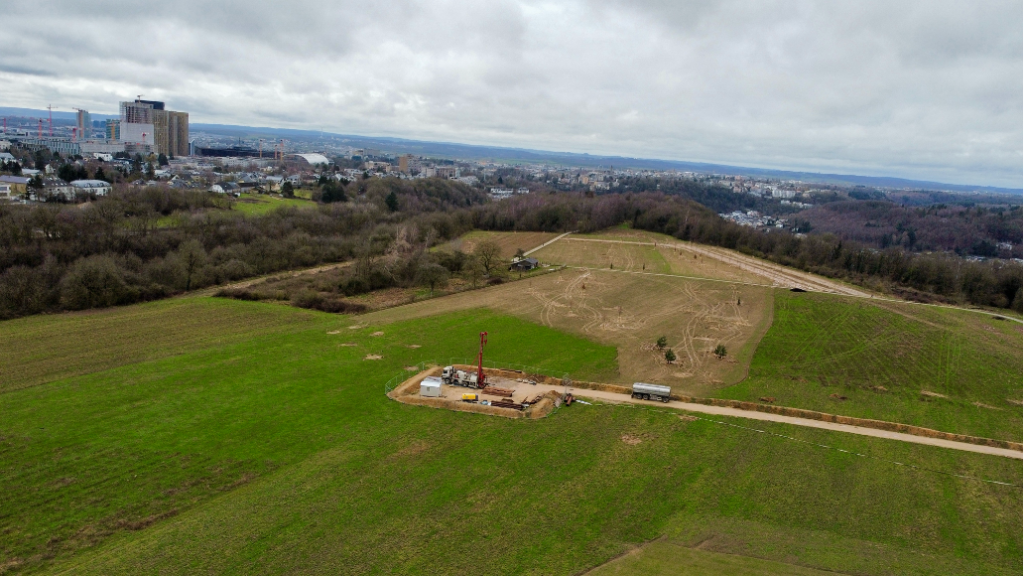
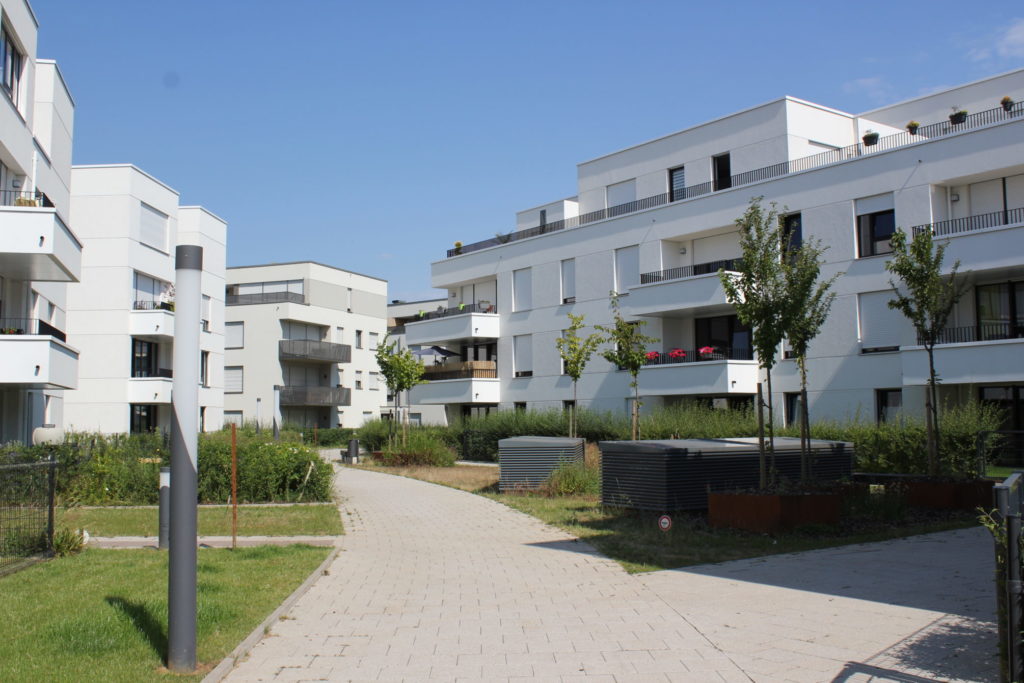
Onsite photo (Source: Fonds Kirchberg)

Outlook

The winning project for Kuebebierg embodies a vision of urban living in harmony with nature. By integrating topography and green spaces, creating pedestrian-friendly environments, and prioritising sustainability, Kuebebierg sets a new standard for future urban developments.

As construction progresses, Kuebebierg aims to become a living testament to the possibilities of sustainable urban planning. The aim is to achieve a district development plan for 2025, build infrastructure in 2027 and initiate the construction of housing in 2029. With its innovative approach and commitment to environmental and social well-being, Kuebebierg represents not just a neighbourhood but a vision of a more sustainable, inclusive, and resilient urban future.

Contact

Fonds Kirchberg: info@fondskirchberg.lu

References

Fonds Kirchberg (French): https://fondskirchberg.public.lu/fr/concepts-urbains/quartiers-futur/kuebebierg.html

Communication of the Luxembourgish government (French): https://gouvernement.lu/fr/actualites/toutes_actualites/communiques/2022/03-mars/02-urbanisation-terrains-kuebebierg.html

Paperjam article (French): https://paperjam.lu/article/kuebebierg-quartier-tourne-ver Record of the project presentation (French): https://www.youtube.com/watch?v=G56wT-yC8mw&t=38s
Blog CIPU

Master Programme for Spatial Planning in Luxembourg 2023: Shaping a Sustainable Future

>

The Master Programme for Spatial Planning in Luxembourg, known as « Programme directeur d’aménagement du territoire » (PDAT) 2023, is the central element of the country’s spatial planning policy. Serving as a framework for a sustainable development of the national territory and for enhancing the quality of life of all citizens, the PDAT defines an integrated strategy for sectorial policies with a territorial impact and defines guidelines, objectives and measures for the government and municipalities. The newly adopted PDAT (21 June 2023), which was prepared by the Department of Spatial Planning in cooperation with an interministerial working group, builds upon a large public participation process in 2018 and the international consultation “Luxembourg in Transition” in 2020—2022.

Structure and objectives

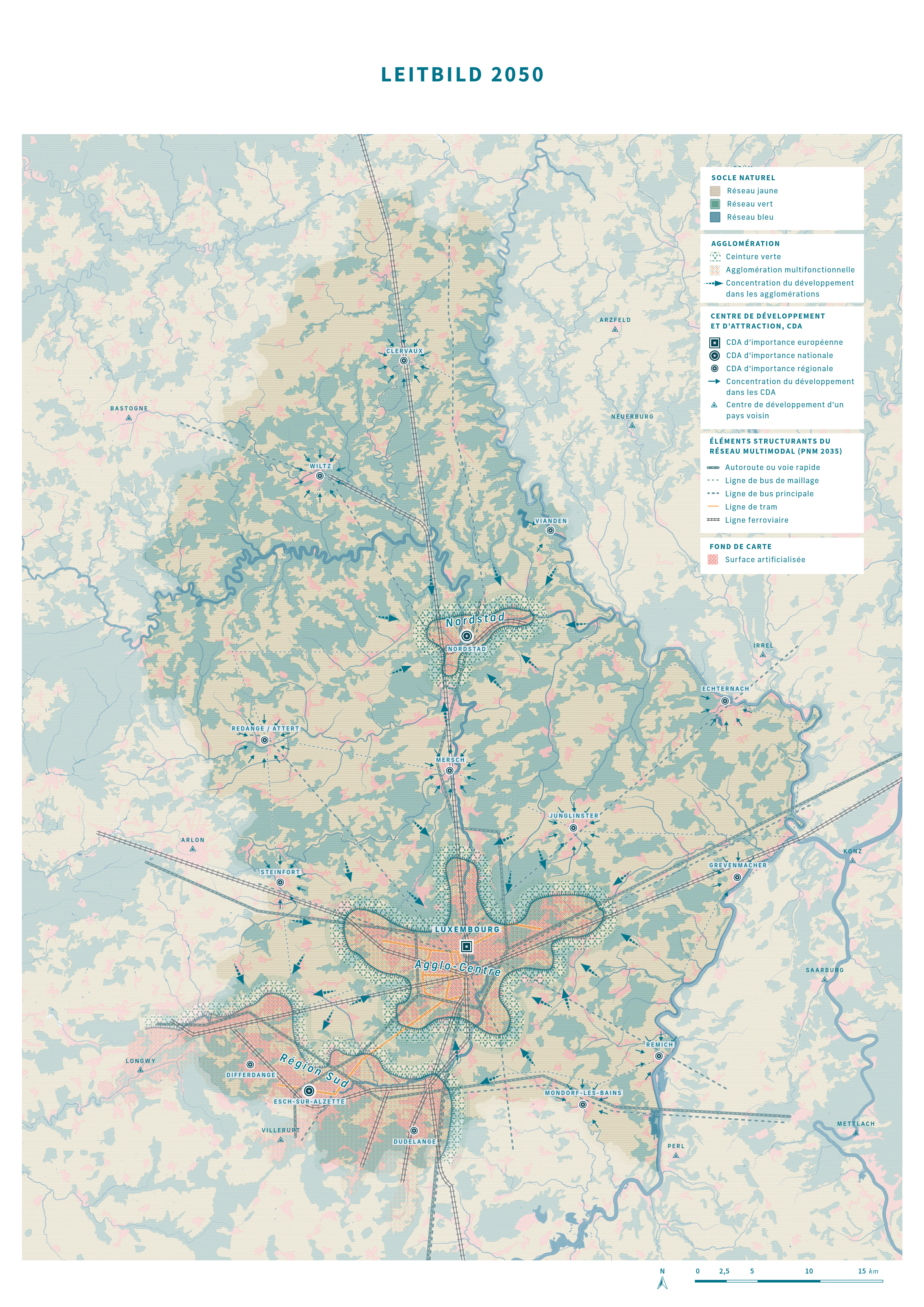
PDAT 2035 (Source: Département de l’aménagement du territoire (DATer) 2023)

In order to frame the strategy, objectives and measures, the PDAT was developed in accordance with the following four guiding principles:

  • Increasing the resilience of the territory
  • Safeguarding territorial, social and economic cohesion
  • Ensuring a sustainable management of natural resources
  • Accelerating the transition of the territory to carbon neutrality

Based on those guiding principles, three policy objectives and a cross-cutting objective have been identified, addressing the development issues highlighted in the spatial analysis as well as the challenges imposed by climate, environmental, geopolitical and health crises:

1. Concentration of development in the most suitable places: Central to the PDAT’s mission is guiding sector policies and supporting municipalities in locating essential functions and services in the most suitable places. This aims to facilitate access to services, anticipate and reduce mobility needs as well as plan for critical infrastructure.

By guiding future development, the PDAT enables efficient infrastructure planning and a cost-effective implementation of sector policies. The territorial strategy encompasses an urban hierarchy based on Central Places (centres de développement et d’attraction, CDA), which is supposed to steer the spatial distribution of population (i.e. development) and employment growth (i.e. attraction) in a sustainable manner.

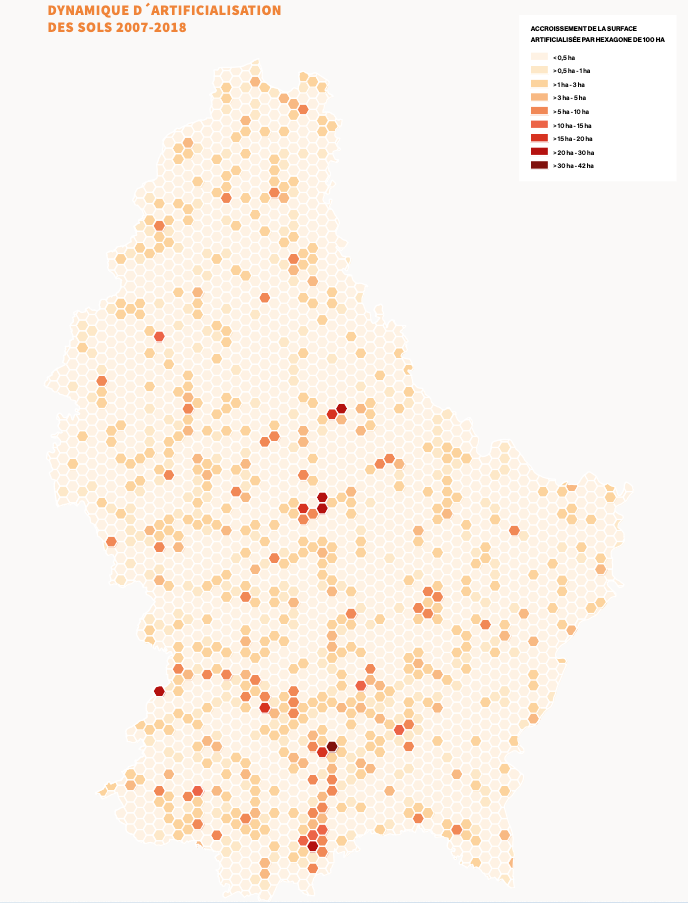
2. Reducing land take: The PDAT focuses on limiting the process of converting natural, agricultural or forest land into built-up areas. Decreasing land take offers several benefits, including mitigating the effects of climate change, preserving natural and semi-natural areas, minimising flood risks, protecting biodiversity, and fostering carbon sequestration. The goal is to gradually reduce land take from by 2035 and tend towards no net land take (zéro artificialisation nette du sol) by 2050.

Dynamics of soil artificialisation 2007-2018 (Source: Département de l’aménagement du territoire (DATer) 2023)

To achieve this, the PDAT puts forward a planning culture that promotes urban regeneration, multifunctionality and efficient land management.

3. Cross-border spatial planning: Taking into account the functional linkages between Luxembourg and its cross-border functional region, the PDAT recognises the need for a concerted territorial development in the Greater Region (Grande Région). To address ecological and climate transition challenges, the Master Programme promotes territorial development strategies for cross-border functional areas, consultation with neighbouring regions in the framework of planning processes, and cross-border resource management.

4. Collaborative Governance as a cross-cutting objective: In the PDAT, governance is considered to be a cross-cutting objective, emphasising the coordination required for effective spatial planning. This is meant to happen horizontally across sector policies, vertically between the State and municipalities, as well as through public participation.

Time Horizon

The PDAT2023 is meant to unfold in two phases: 2023-2035 and 2035-2050. The first period until 2035 will act as a transition phase, which contributes to reversing the current development trends. Actions will focus on identifying and adopting instruments for the implementation of the Master Programme as well as initiating pilot projects and stakeholder connections.

The second phase, from 2035 to 2050, will ensure a steady transition and reverse the trends in question by the implementation of the strategies, while monitoring the developments as well as adapting approaches as needed.

Programme directeur d'aménagement du territoire 2023 - Stratégies  territoriales - Portail de l'aménagement du territoire - Luxembourg
Vision 2050 in the PDAT (Source: Département de l’aménagement du territoire (DATer) 2023)

Implementation

In order to achieve the above-mentioned policy objectives in the given timeframes, two territorial strategies have been developed at different scales. First, the national territorial development strategy « Leitbild 2050 » envisions a carbon-neutral and resilient territory, emphasising green, yellow and blue networks, the concentration of development in accordance with the urban hierarchy, and a sustainable mobility. This national territorial development strategy has also been broken down to so-called action areas (espaces d’action) at a functional-regional level. In this context, territorial visions for the three urban agglomerations have also been developed. Second, the territorial development strategy at the level of the Greater Region promotes cooperation in cross-border action areas, in accordance with the Interreg VI Greater Region programme. This cooperation fosters integrated territorial development in cross-border functional areas, complementing previous approaches by addressing challenges linked to the environment and natural resources. The implementation of strategies will be fostered through the adaptation of existing regulatory instruments and the potential creation of new ones.

Conclusion

The Master Programme for Spatial Planning in Luxembourg sets a forward-looking and ambitious territorial vision. By addressing climate change, resource preservation and sustainable growth, the PDAT paves the way for the ecological transition of the territory. Through clear strategic objectives and cross-sectoral coordination, Luxembourg is taking a further step towards sustainable development and enhancing citizens’ quality of life.

References

Master Programme for Spatial Planning in Luxembourg – « Programme directeur d’aménagement du territoire » (PDAT) 2023 (French): https://amenagement-territoire.public.lu/content/dam/amenagement_territoire/pdat-programme-directeur-damnagement-du-territoire-4072023.pdf

Spatial planning portal (French): https://amenagement-territoire.public.lu/fr/strategies-territoriales/programme-directeur.html

Blog CIPU

CIPU Workshop No 2: Exploring Multifunctionality in Urban Spaces

>

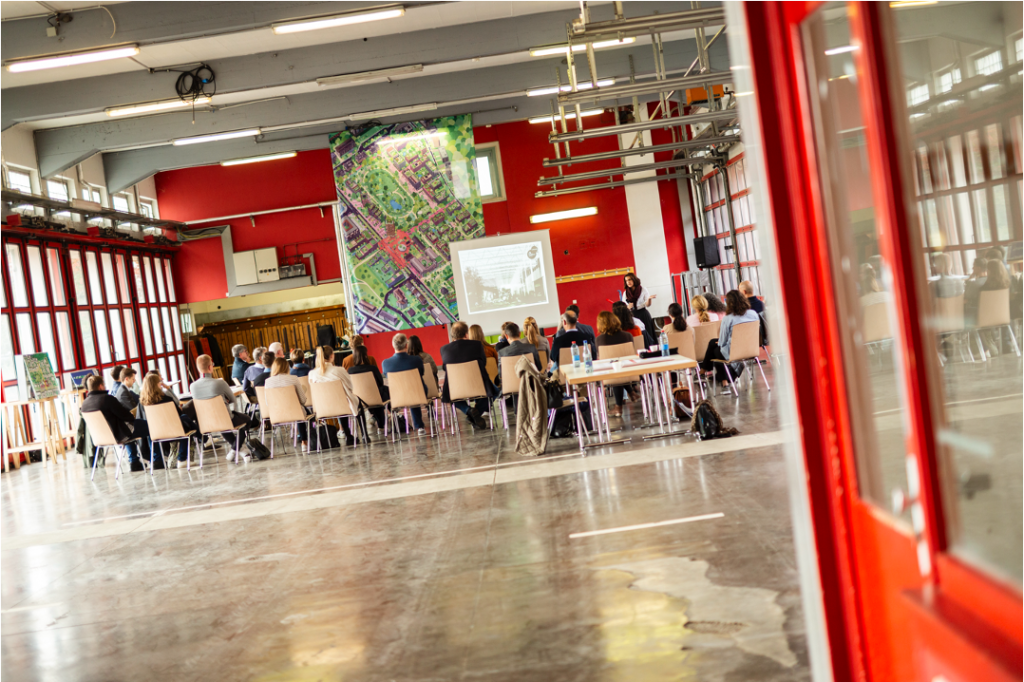
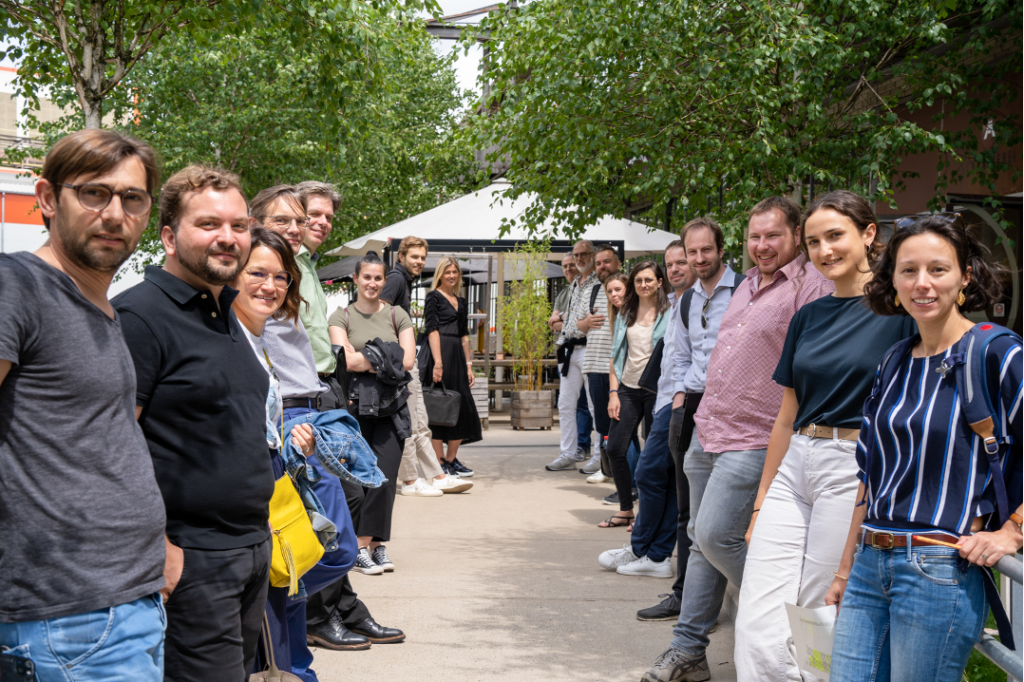
The second workshop organised by the CIPU office on the 18th of October narrowed down the annual topic of multifunctionality in the city by focusing on the integration of production and crafts in the city. The participants had the chance to delve into the concept of the Productive City from the different perspectives of municipal strategy development, the technical implementation and the regulatory framework.

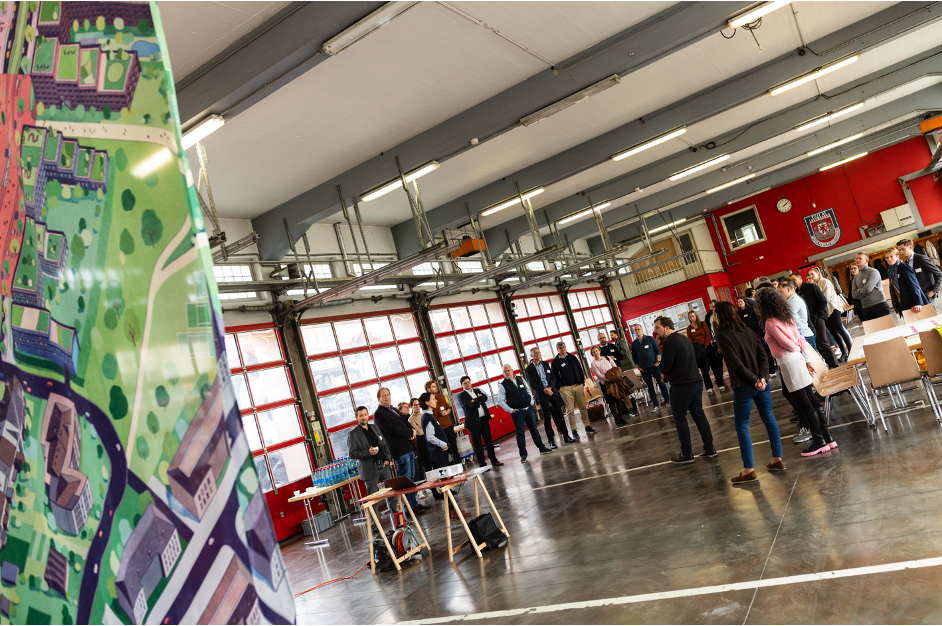
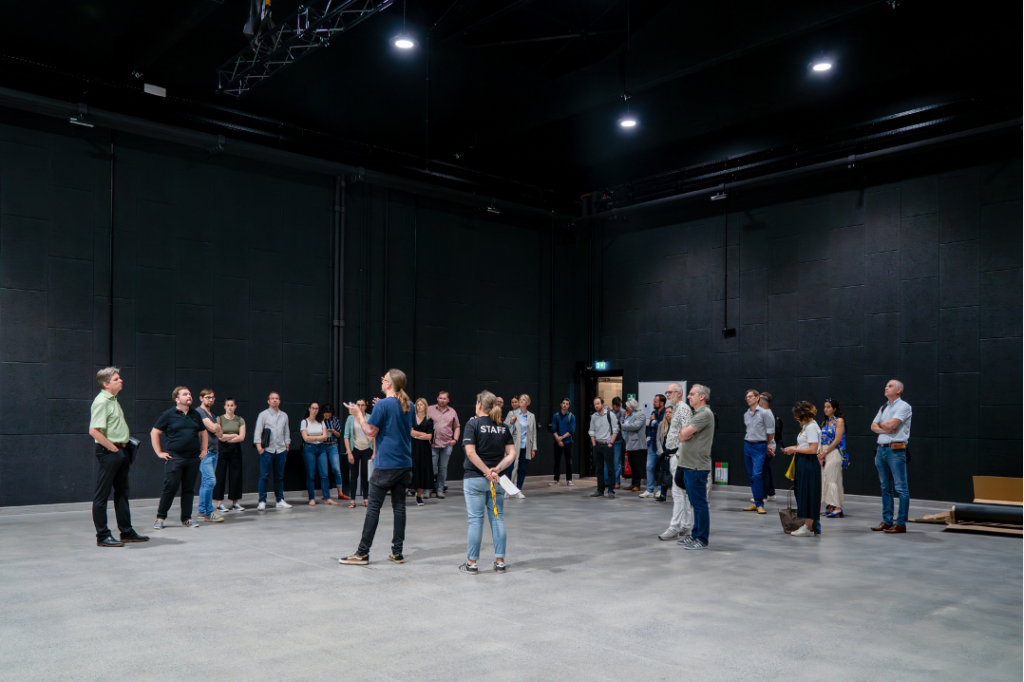
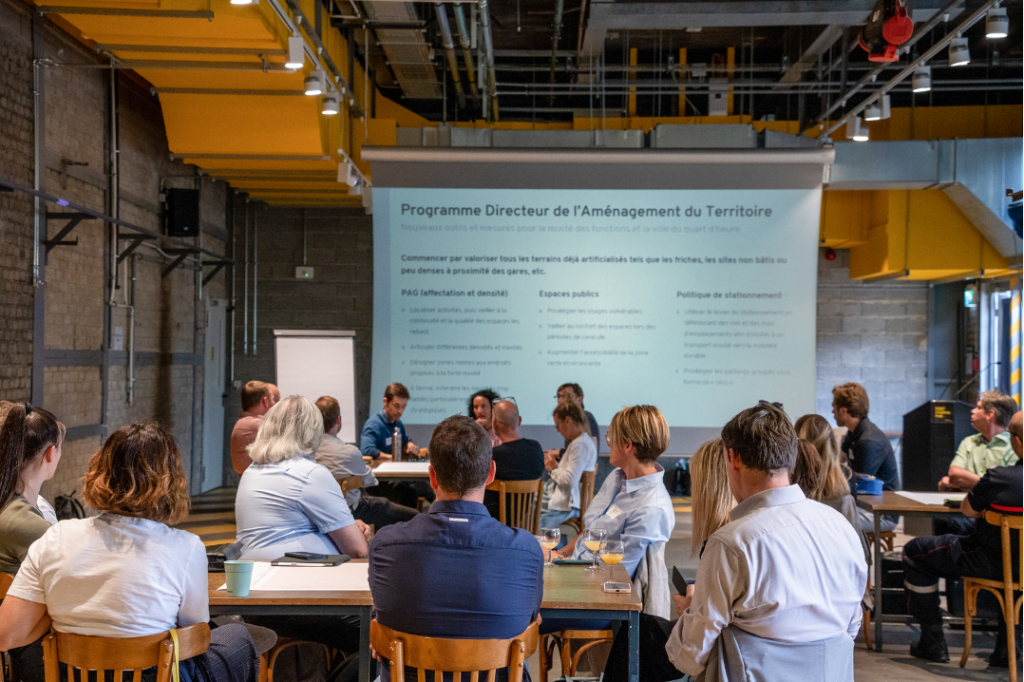
The event was hosted in the former fire station barracks in Luxembourg city. The afternoon began with introductory presentations by the City of Luxembourg and the Chambre of Crafts (Chambre des Métiers). These included the Schluechthaus project in Hollerich and the development of the site around the fire station barracks and the former stadium. The focus here was on the technical conversion work on the barracks and the old Schluechthaus in order to bring the buildings up to the current safety regulations for public buildings for interim use. The third presentation dealt with the survey results of the Chambre des Métiers regarding the property requirements of craft businesses in the country.

Source: Ville de Luxembourg

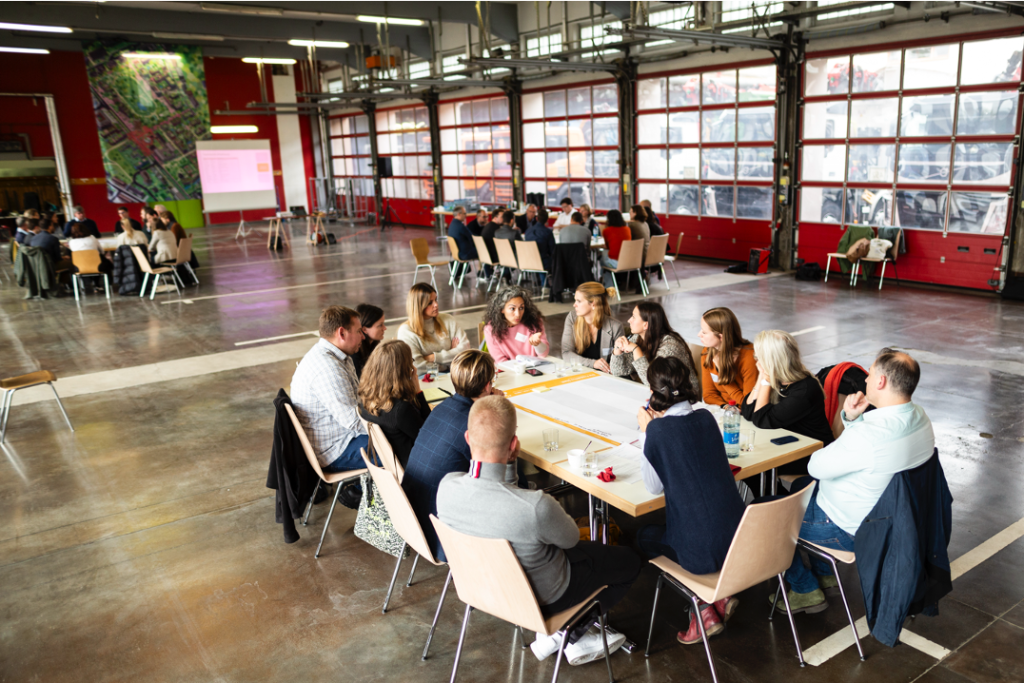
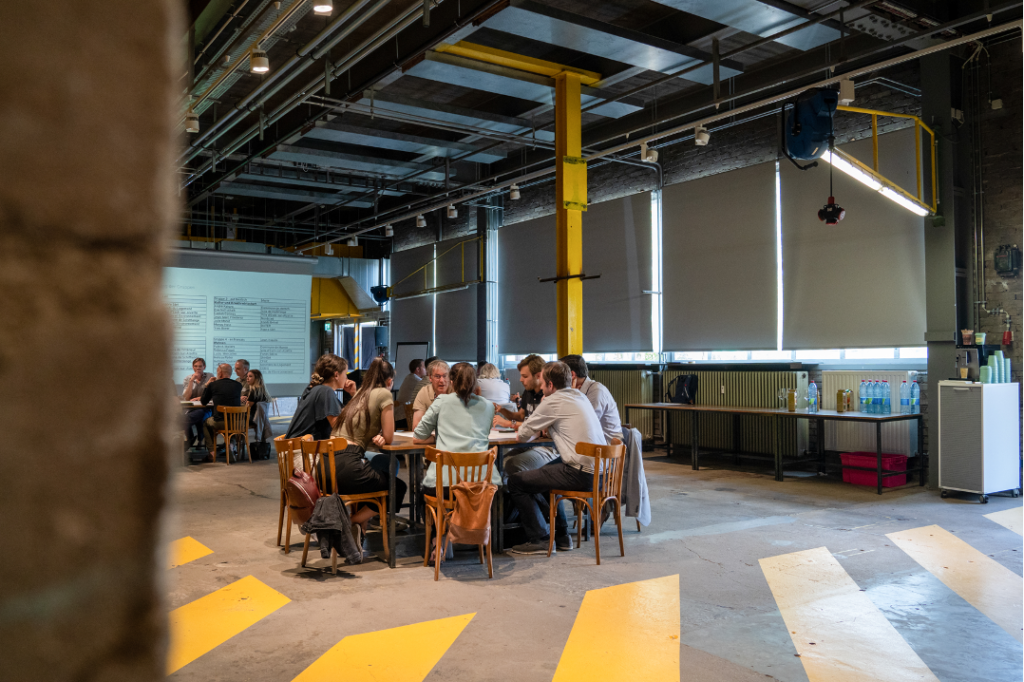
The workshop began with an introductory presentation looking back on the previous thematic workshop in June and the excursion to Brussels in August facilitated by the CIPU. The tasks of the three discussion tables were then introduced. This was followed by a phase of group work in which all participants were assigned to a discussion group, each of which dealt with different aspects of the realisation of the productive city. The results of the discussions are explained in more detail in this documentation.

The first group focused on developing a comprehensive strategy for the implementation of the « Productive City » concept in municipalities. The discussion emphasized the need for both national and municipal-level actions, with the proposed national strategy serving as a guide for municipalities, linking them through centralised elements like a registry of businesses and potential mixed-use areas, as well as a crafts agency. The strategy identified the importance of clear goals, typologies in a national register, and the establishment of cross-sector working groups and a national crafts agency to ensure a multifaceted and coordinated approach. Key actors include a National Crafts Agency, municipalities, the Ministry of the Interior, the Crafts Chamber, and Luxembourg, each playing crucial roles in coordination, financial support, local implementation, and regulatory oversight.

Source: Ville de Luxembourg

The second group delved into the technical implementation of the « Productive City » concept, examining two projects within the current regulatory framework. The first project focused on a productive ground floor in an urban setting, aiming to divide 2,600 m² into flexible modules for various tenants, posing challenges related to flexibility, compatibility, and efficient building planning. The second project involved repurposing historic industrial halls for productive use, facing challenges concerning compatibility with other uses, heritage preservation, and operational concepts. The group identified challenges such as stakeholder coordination, urban integration, and flexibility of building structures, proposing solutions like national-level frameworks, internal building concepts, and zoned programming to address these concerns and make these projects feasible and adaptable over time.

The third group focused on the regulatory framework, aiming to identify obstacles and problematic provisions within existing municipal regulations (PAG/PAP QE/RBVS) related to the implementation of mixed-use areas combining residential and artisanal activities. The discussion revealed that challenges extend beyond local regulations, requiring national-level interventions. Key obstacles included the PAG zones’ strong emphasis on functional separation, parking space regulations, and the absence of a national definition for artisanal activities. Proposed solutions included national-level adjustments to the Règlement Grand-Ducal, standardised parking regulations, and clear definitions for artisanal activities to facilitate local implementation. Additionally, the group advocated for enabling densification in existing activity zones, securing existing businesses, and addressing the impact of the current real estate market on the attractiveness of various functions. The need for collaborative decision-making involving municipalities was emphasised throughout the discussion.

Source: Ville de Luxembourg

The workshop shed light on the urban challenges of blending housing and craftsmanship, emphasising the need for collaborative and holistic solutions. Group discussions pinpointed obstacles like technical requirements for buildings, zoning restrictions and parking norms, stressing the call for centralised coordination and requirement analyses. Overall, the workshop underscored the importance of a united effort to craft practical, flexible strategies for fostering dynamic, mixed-use urban spaces.

Contact

CIPU: cipu@zeyenbaumann.lu

References

CIPU website (French and German): https://site.cipu.lu/

Blog CIPU

CIPU Workshop: Exploring Multifunctionality in Urban Spaces

>

During the first workshop organised by the CIPU office in 2023 and held on the 27th of June, the participants delved into the concept of multifunctionality in the city, focusing on different scales (building/parcel, district, city). They had the opportunity to explore various planning examples and engage in discussions about the obstacles, potentials, and instruments associated with multifunctional urban use.  

Copyright: Melt Studio, 2023

The day started off with an informative guided tour of the hosting location, the 1535° Creative Hub in the city of Differdange. The location symbolises creativity and innovation in Luxembourg. Established in 2013 by the city of Differdange, the Creative Hub got named after the melting temperature of iron at 1535°C, paying homage to the industrial heritage of the site and the whole city. Today it hosts creative and cultural start-ups, small- and medium-sized enterprises, artists, a co-working space as well as e.g. rentable music studios. More than just the physical space, the 1535° Creative Hub follows a community-driven approach, facilitating collaboration and sharing of expertise among its members. It functions as an open platform fostering synergies and networking, connecting actors from the cultural and creative industry and creating an open-minded environment for the sector.

Copyright: Melt Studio, 2023

After discovering the site, the workshop participants received input on functional mix in urban areas and its current relevance in Luxembourg. As a cross-cutting topic in the Master Programme for Spatial Planning 2023 (Programme Directeur de l’Amenagement du Territoire), it is primarily addressed under the objective of reducing soil artificialisation. In addition to that, the topic is considered under the objective of concentrating of different functions through e.g. creating Centres of development and attraction (Centres de développement et d’attraction). Furthermore, two examples developed during the Luxembourg in Transition Process (LiT) were presented, i. e. the densification strategy for the cross-border town Esch-sur-Alzette (LU) and Audun-le-Tiche (FR) as well as the plan for the commercial area Foetz to be transformed into a mixed-use zone. The local input was complemented with several examples from international multifunctional planning processes form Paris, Bern, Linz, Hamburg, Brussels and Anderlecht.

Copyright: Melt Studio, 2023

Finally, the participants delved into discussions on multifunctionality in urban spaces. The focus was on exploring the potential of integrating multiple functions within city structures on different scales (building/parcel, district, city). Through interactive sessions and planning examples, the workshop shed light on the obstacles, potentials, and instruments associated with multifunctional use in various contexts.

Working in groups, the participants explored multifunctionality in three key areas: commerce and services, production and manufacturing, and the creative sector and culture. These discussions considered the different existing scales, including the city, districts, and individual plots. The fourth group addressed the multifunctional use of housing in combination with schools, shopping centres, and industrial sites. These group sessions provided valuable insights into the challenges and opportunities associated with integrating different functions within urban structures. The results were then presented and discussed in plenum. The results of the discussions will be available on the CIPU Website soon.

Copyright: Melt Studio, 2023

By examining multifunctionality at different scales, the workshop encouraged innovative approaches to urban planning and development. The participants considered the potential of multifunctional spaces to (re-)vitalise communities, optimise resource utilisation, and promote sustainable development. The workshop held within the CIPU framework offered a platform for collaboration and knowledge sharing, bringing together diverse perspectives from local and regional/national stakeholders as well as from thematic experts. It highlighted the importance of considering multifunctionality as a crucial aspect of contemporary city planning as well as which challenges need to be addressed by already existing and potential instruments.

Contact

References


Blog CIPU

Rout Lëns – the sustainable, innovative, resilient new neighbourhood in Esch-sur-Alzette

>

Esch-sur-Alzette is the second largest city of Luxembourg and has a rich industrial heritage. Not least because of this heritage, the city is currently undergoing a significant transformation. At the forefront of this process is the visionary project Rout Lëns. Aimed at revitalising a former industrial site, Rout Lëns is set to become a sustainable and socially vibrant neighbourhood.

Aim

Population projections estimate that by 2050, the city of Esch will almost double to 220,000 inhabitants. To meet this growing demand, new infrastructure is needed. Rout Lëns fits this dynamic perfectly. The project will revitalise a disused industrial site of 10.5 h and transform it into a sustainable and liveable neighbourhood. The overall objective is to create a harmonious balance between urban development, community engagement, and environmental sustainability. The project seeks to develop a vibrant, inclusive, and environmentally conscious space where residents can live and work. In addition, the neighbourhood is being developed in the sign of social and intergenerational diversity. The visionary approach pursues the following objectives and aims to create:

  • A strong territorial identity: building a strong community aligned with the industrial heritage and rehabilitating it.
  • A simple and fluid daily life: enabling a dynamic and convenient life for residents through technological innovation, soft mobility and logistics.
  • A territorial, human and cultural link: encouraging initiative by connecting people and different users of the space such as residents, visitors, employees, shop owners and neighbours.
  • A resilient neighbourhood: creating a sustainable community and space with high adaptability to challenges and changes.
Copyright: IKO Real Estate, 2023

Partnership

The Rout Lëns project is driven by the collaboration of various stakeholders and in close cooperation with the municipality. IKO Real Estate leads the project, supported by the architecture-urbanism agency Reichen et Robert & Associés, along with the landscaper Agency Phytolab. For the first two buildings Tatiana Fabeck and Carta Reichen and Robert & associés were contracted. The participatory process is guided by CityTools, an agency specialised in sociological and urban planning projects that incorporate local community input. This partnership ensures that the development of Rout Lëns remains aligned with the needs and wishes of its future inhabitants. Furthermore, the project is aligned with the Luxembourg government’s sector plan for housing, and the city of Esch-sur-Alzette has acquired almost 300 housing units, ensuring that 30% of the housing in the new district will be affordable housing.

Activities

The implementation of the project follows four founding pillars:

  • The urban structure – Industrial Culture Alley: The “Allée de la Culture Industrielle » will be a pedestrian route linking the five industrial heritage facilities which have become user-friendly, multifunctional places (Magasin TT, Halle des Turbines, Halle des Soufflantes, Portique de la Mollereï et Poste d’Aiguillage).
  • The built form – A stratified neighbourhood: a variation of building height will give multifunctionality to each stratum and diversity of uses such as hanging gardens, urban gardening, terraces, unobstructed views and a different atmosphere at each level of altitude.
  • The place of nature – A vegetal feeling: The masterplan of Rout Lëns prioritises well-being and nature in the real-estate project by e.g. planting almost 700 trees in the district.
  • A sustainable & innovative neighbourhood: the district will be adjusted towards innovation in terms of sustainable mobility, architecture, urban development, and energy supply consumption including waste management, urban farming and circular economy approaches.
Copyright: IKO Real Estate, 2023

The development of Rout Lëns is a participatory process that actively involves the local community. Through surveys, workshops, and consultations, residents and stakeholders had the opportunity to contribute their insights, ideas, and concerns during the first phases and will continue during its further implementation. This inclusive approach empowers the community to shape the future of their neighbourhood, fostering a sense of ownership and local identity.

The project includes housing of all sizes, from studios to flats with 1 to 4 bedrooms, including low-cost accommodations. The integration of affordable housing supports the project’s aim of creating a high degree of social mix within the neighbourhood. Although 81% of the area is dedicated to housing, it will not be only a residential neighbourhood since other uses will be included, such as schools, community and public services, shops and private services as well as offices and shared workspaces.

Copyright: IKO Real Estate, 2023

The Well Community certification guarantees that all buildings developed in Rout Lëns meet high-quality standards, focusing on the well-being of the residents. The certification prioritises air and water quality, natural light sources, and overall physical and psychological comfort. The incorporation of green spaces, including an urban forest, flower-filled meadows, and small habitats, will enhance biodiversity and provide pleasant environment with high quality of stay.

Copyright: IKO Real Estate, 2023

Soft mobility solutions will be prioritised to encourage sustainable transportation options, such as walking, cycling, and public transportation. A comprehensive network of shared mobility services, cycle paths, Bus Rapid Transit (BRT) and a high-speed tram line will ensure convenient accessibility to and within the neighbourhood. The connectivity and spatial planning are designed to align the new neighbourhood with surrounding residential areas and extend the city centre instead of depicting any competition for the rest of the city. In addition to that, the district is planned to be carbon-footprint-neutral and will try to recover grey water (wastewater from showers and sinks) and it will be supplied with geothermal energy. You can learn more about the energetic concept of the project in the first session of the CIPU lecture series from May 2023. You can find the recording here: https://www.youtube.com/watch?v=G88Gm22oHy4

Copyright: IKO Real Estate, 2023

The district will be constructed in three phases. The Eastern part will be constructed from 2024-2029, followed by a transition phase in 2028 resulting in construction phase 2 and 3 from 2030-2033. This way, certain sectors will be functional and habitable before the whole neighbourhood will be finished in 2035.

The new school. Copyright: Tatiana Fabeck, 2022

Outlook

Rout Lëns is a transformative project that envisions a sustainable, resilient, and socially inclusive neighbourhood in Esch-sur-Alzette. By combining innovative design, community engagement, and environmental management, Rout Lëns is set to revitalise the former industrial site into a liveable urban space. The project’s commitment to open-mindedness, innovation, inclusion and heritage is reflected in the four pillars of its vision. The realisation of Rout Lëns as is good practice of revitalising an industrial site and creating a sustainable and innovative urban space aligned with its heritage.

If you want further information and get a glimpse at how the district is going to look like, you can find more information, maps and visual material on the official website where you can also subscribe to the newsletter.

Contact

Rout Lëns: info@routlens.lu

IKO Real Estate: communication@ikorealestate.eu

References


https://iko.virtualbuilding.fr/iko-routlens/le-quartier
Blog CIPU

Plateau du Funiculaire in Differdange: a large scale brownfield development on a former steel mill landfill

>

The Grand Duchy of Luxembourg, at the heart of Europe, continues to gain about 2% in population every year. The South of the country, the former industrial area, is growing especially rapidly, by a quarter since 2010 and in 2021 it hosted a third of all residents. Demand for housing has increased and is one of the most rapidly increasing expenses for Luxembourg households today.

In the already urbanised South, many large-scale development projects for new districts on industrial brownfields are being realised or are in the pipeline. This impacts the urban morphology of the area. Formerly geographically separated urban districts are now connected. But how can new districts interconnect urban fabrics, let alone urban functions? Differdange, the third largest city in Luxembourg, is home to such a brownfield project, ‘Plateau du Funiculaire’.

Rationale for action

The rapid development of the steel industry in Luxembourg during the 19th and 20th centuries created a unique urban tissue in the South. Housing was built around steel mills, as in other industrial areas. This resulted in large industrial zones being next to urban centres. In some cases, as in Differdange, these industrial zones are ‘wedges’, impermeable barriers that separate districts functionally.

Steel production in Luxembourg has declined over several crises and steel mills have reduced or entirely stopped production. Around 2000, some 25 hectares became available in the centre of Differdange. The ‘Plateau du Funiculaire’ was formerly a landfill for the adjacent steel mill.

Urban development concept of the ‘Plateau du Funiculaire’. The urban district of the development is shown in the upper part of the image with the new shopping centre ‘Opkorn’ in the upper right corner. The park along the Chiers is shown in the bottom half of the image. Source: Dewey+Muller, 2022.

Objective

The Plateau du Funiculaire functionally split several Differdange districts, so plans were drawn up to transform the brownfield site into a new urban district. From 2004, the city has developed urban concepts in cooperation with many local and national players. A new district, providing housing, offices and commercial areas is planned to connect the existing districts of Differdange, Oberkorn and Fousbann.

Some challenges had to be addressed in developing the urban concepts, including pollution of the area due to its use as landfill for the blast furnace. In addition, the river Chiers running through the area was planned to be renaturalised, to provide water retention and flood areas.

Time frame

The first scoping studies were realised as early as 2004. Since then, planning and construction has been ongoing with most of the district being finalised in 2020. Final construction during 2022 will complete the project on the former landfill.

Key players

The key player for developing the new area was the city of Differdange. The urban concept was developed with a Luxembourg planning office as well as an investor.

Looks and feels of the urban design of ‘Plateau du Funiculaire’. Source: LuxEnergy S.A., 2021.

Implementation steps and processes

Following the first plans to develop the district in 2000, initial research in 2004 assessed the landfill pollution. At the same time, the city of Differdange also outlined strategic objectives for the district. In 2005, a planning office proposed the look and feel of the new district as an urban concept. Development started in 2006 when the historic ‘Villa Hadir’, a former reception and administrative building for the blast furnace was refurbished. Plans to implement the urban concept were submitted for building permits.

A brand was created in 2007 to establish an urban identity to market the new district to future inhabitants, businesses and commerce. Work on the infrastructure started in 2009 and the first bricks for the residential buildings were laid in 2011. In the same year, the recreational park was finalised, allowing neighbourhood residents to get to know the new urban district. Around 2019, a late change to the project integrated a multi-functional tower, called ‘Gravity’, increasing the number of planned housing units from 650 to 728.

Required resources

The resources used are not known.

Results

After a bit more than a decade of construction, the new district will be finalised in 2022. Within 10 years, 728 housing units have been created, providing accommodation for more than 1,600 people. The district also features 15 km2 of office and retail area. A school, a section of Luxembourg university, public administrative offices and shops complement the housing so the district is a fully developed urban quarter of Differdange.

A new train station links the area to the national railway network. In addition bus connections as well as bike and pedestrian infrastructure connect the district both internally and to the surrounding areas.

To minimise soil sealing, ‘Plateau du Funiculaire’ is high density. Nevertheless, some polluted parts of the former landfill were sealed with an artificial layer of clay so surface rainwater can drain into the nearby river. Rainwater that penetrates polluted soil layers is collected separately for treatment.

Residential blocks in the ‘Plateau du Funiculaire’ district. Source: LuxEnergy S.A., 2021.

Experiences, success factors, risks

The relatively short construction period of ‘Plateau du Funiculaire’ highlights good preparation. Potential obstacles were identified, and solutions developed to avoid these.

The urban concepts and building permits provided planning security. The late modification to include a multi-functional tower in the district shows the project adapted to changing demands. Such flexibility is important as needs and requirements usually change for decade-long large-scale urban development projects.

Conclusions

‘Plateau du Funiculaire’ is a prime example of a successful large-scale brownfield development project. Such projects can close functional gaps between urban districts, offering new housing and commerce. In addition, interests from multiple public and private stakeholders can be addressed in one go. It also shows innovative approaches to issues like polluted soils that are frequently encountered in brownfield developments.

‘Plateau du Funiculaire’ also underlines that brownfield development offers much more freedom compared to developments in existing urban areas. Measures can be discussed before being realised in detail, helping to avoid conflicts.

In addition, brownfield development projects such as ‘Plateau du Funiculaire’ are testbeds for new approaches and technologies. The size of the district meant that planners faced challenges that could not be solved with existing planning approaches. An example is heating for the residential units where a centralised district heating system was planned as early as 2007 to reduce infrastructure costs and save energy.

Today the district offers a new face for Differdange and combines different urban functions in an optimal way. With multiple housing and commercial possibilities, ‘Plateau du Funiculaire’ will eventually become the new centre for the town.

Contacts

Urban technical service of Differdange: pag@differdange.lu

References

Dewey Muller, 2018: Plateau du Funiculaire project presentation (German): https://www.deweymuller.com/projekte/plateau-du-funiculaire/

Aurea Differdange, 2020: Project developer website (in French): https://www.aurea-differdange.lu/fr/localisation

Blog CIPU

LUGA 2025: Luxembourg Urban Garden Show

>

Urban garden and horticultural shows have a long tradition in Europe. Many countries organise them, notably France with ‘Villes et Villages Fleuries’ (flowering cities and villages) and Germany with ‘Bundesgartenschau’ and ‘Landesgartenschau’ (federal and regional garden show).

Parks and green areas are created or refurbished to accommodate temporary exhibition areas. These spaces increase the attractiveness of cities and the well-being of residents. In 2025, an urban garden show will cover the whole of Luxembourg.

Rationale for action

Luxembourg has a long tradition in horticulture and related sectors. One is food production that yields a large range of niche products and producers as well as a well-developed local market which currently lack public recognition. An example is the long tradition of rose-growing in the country.

Objective

The Luxembourg Urban Garden show (LUGA) was launched to draw the attention of residents and tourists to the ‘green economy’ in Luxembourg. Appreciation for green jobs and local production will be increased by highlighting production methods, products and their historic and cultural importance. In addition to promoting the agricultural and horticultural sectors, it will also showcase ecological planning in the city of Luxembourg.

Cover image of the ‘Urban development nature’ topic. Source: LUGA – Luxembourg Urban Garden.

Time frame

Back in 2011 the idea for a horticultural show came up, which led to pre-studies and concept development. The LUGA will be held from May to October of 2025 but, as with other garden shows, the changes will be longer lasting, increasing the attractiveness of the city.

Originally, the garden show was planned for 2023. Because of the restrictions imposed in response to the COVID19 pandemic, the original timeplan had to be amended. In October 2021, it was decided to postpone the LUGA until 2025. Other measures have been put in place to compensate for the delay, inter alia a significant increase of the LUGA’s budget from EUR 10 million to EUR 22 million.

Key players

The City of Luxembourg has a key role as the main exhibition site. The Ministry of Agriculture, Viticulture and Rural Development is a key player and LUGA will be implemented in cooperation with the Ministry of Culture, the Ministry of Economy and the Ministry of Finance.

In charge for the implementation if the horticultural show is an association of which the Ministry of Agriculture, Viticulture and Rural Development and the City of Luxembourg hold equal shares.

Cover image of the ‘Social nature’ topic. Source: LUGA – Luxembourg Urban Garden

Implementation steps and processes

The Luxembourg horticultural association planted the seed for a horticultural show back in 2011. Since then, administrations have been active and have also conducted a feasibility study. In 2017, the garden show was approved and in 2019 the financial agreement was signed by all the partners. To implement LUGA an association was founded in 2019.

In July 2019, there was a press conference with political representatives of Luxembourg city and the Ministry of Agriculture, Viticulture and rural Development where the plans, layout and objectives were presented to the public.

Since then, the LUGA association has worked on detailing the plans and preparing implementation of the garden show to take place from May to October 2025.

The exhibition sites and their topics in Luxembourg City. Source: LUGA – Luxembourg Urban Garden.

Required resources

The project has a budget of EUR 10 million. Half of this is provided by the state and half by the City of Luxembourg. The budget should cover the LUGA association operating costs, coordination activities and also co-finance some of the projects.

Since 2019, four people in the LUGA association have been working full-time on the show. To implement the show, the association can rely on the support of many national and city services, for example the Luxembourg City park service.

Results

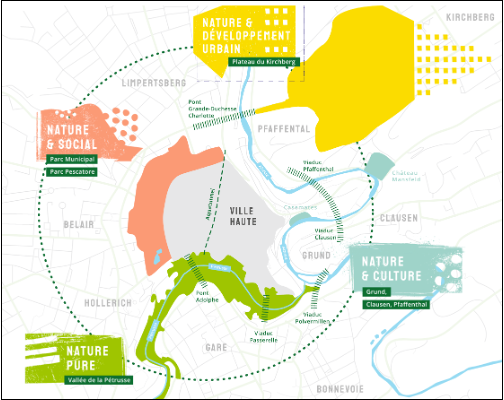
A public workshop in the presence of the Minister for Agriculture, Viticulture and Rural Development and the Luxembourg City Alderman for urban development was held in November 2019 where interested citizens could propose ideas. This workshop gathered more than 400 ideas from all parts of the country. These ideas were categorised in four themes that will structure the show in four sites in Luxembourg City:

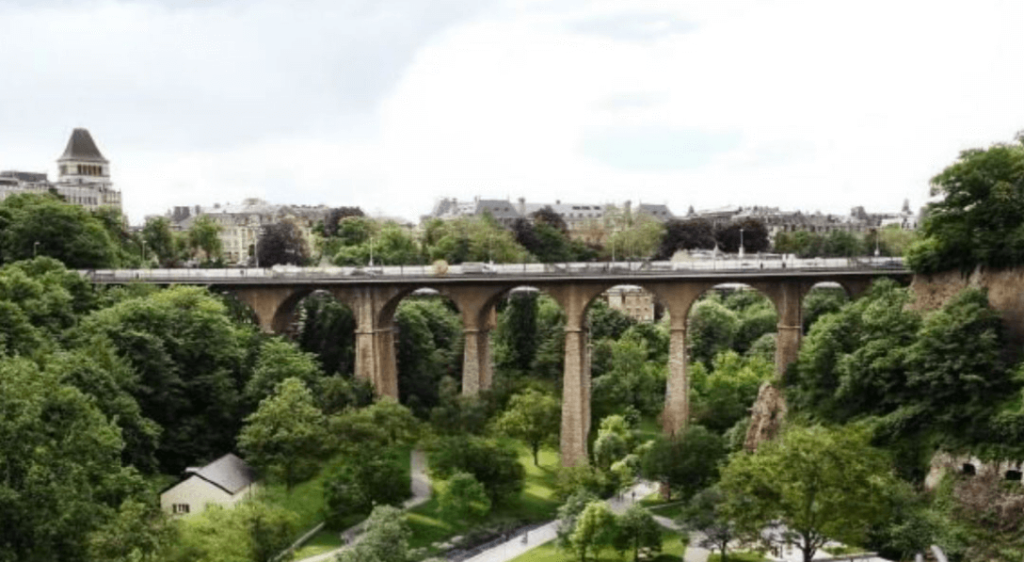
  • ‘Pure nature’, will highlight the newly renaturalised Pétrusse river and adjacent park in the Pétrusse valley, a deep valley next to the city centre;
  • ‘Social nature’, will cover community gardens, ecological agriculture and urban agriculture in the Limpertsberg residential area and its park;
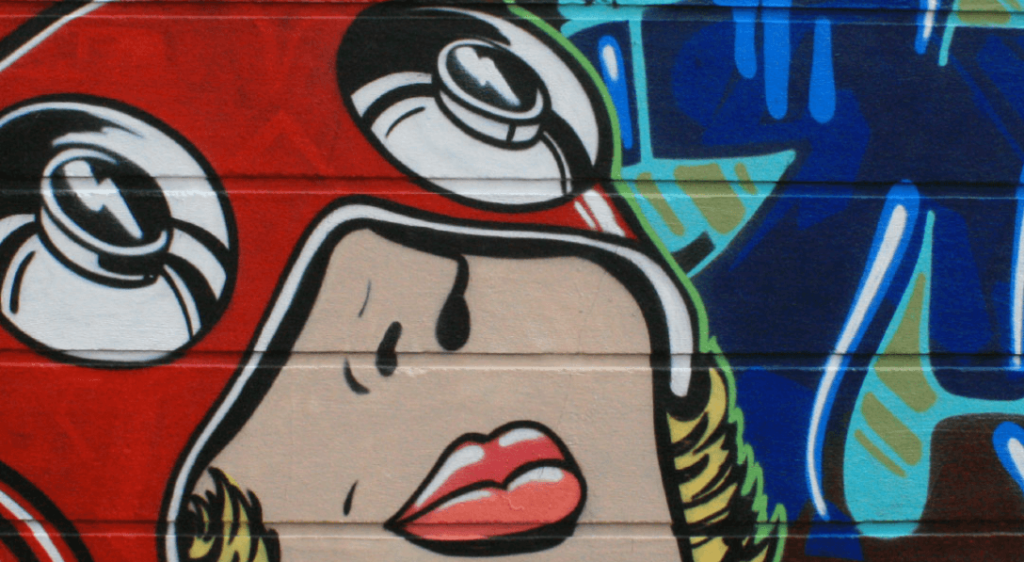
  • ‘Culture nature’ will feature historic gardens, floral art and cultural events in the historic eastern part of the city, around Grund, Clausen and Pfaffenthal;
  • ‘Urban development nature’ will show new and innovative approaches to urban greenery in the Kirchberg business district.
Cover image of the ‘Pure nature’ topic. Source: LUGA – Luxembourg Urban Garden.

Every exhibition site will be open to the public. The association counts on active involvement and support from citizens, businesses and interested organisations to implement LUGA in a collaborative way.

LUGA is designed to be open. Citizens can become involved and contribute as can other areas or businesses across the country that wish to become affiliated partners. This way, they can benefit from the publicity and attention created through LUGA.

Cover image of the ‘Culture nature’ topic. Source: LUGA – Luxembourg Urban Garden.

Experiences, success factors, risks

The enthusiastic publicity and promotion of LUGA in Luxembourg is raising expectations of residents and visitors towards the garden show.

The participative workshop in November 2019 was a success. Asking citizens and interested persons to propose ideas and concepts provided a wealth of proposals that could be realised under LUGA. Many of the ideas will be implemented in at least one of the exhibition sites in Luxembourg City or elsewhere in the country. Such participation significantly increases acceptance and ownership of citizens with the project.

Conclusions

With LUGA, Luxembourg will hold its first garden show. Many people and administrations are collaborating to make the show a success in 2025. With the participation of citizens, lasting changes to the urban landscape and the interesting ideas and concepts reported in the press, LUGA promises to be a successful event.

Contact

General E-mail address of LUGA: info@luga2023.lu

References

LUGA – Luxembourg Urban Garden, 2020: Website (in German):

https://luga2023.lu/de/

Luxembourg Government, 2019: Public announcement of the Luxembourg Urban Garden exposition (in German):

https://gouvernement.lu/de/actualites/toutes_actualites/communiques/2019/07-juillet/18-schneiderr-expo-horticole.html


Blog CIPU

Deep geothermal drilling in Dudelange: Geothermal energy to power a brownfield development

>

Many brownfield development projects are under way in the Grand Duchy of Luxembourg. ‘Porte de Hollerich’ in Luxembourg City, ‘Belval’ in Esch-sur-Alzette, ‘Wunne mat der Wooltz’ in Wiltz and ‘NeiSchmelz’ in Dudelange are a few examples. All these are creating new urban districts with living space for many additional inhabitants and businesses. The ‘NeiSchmelz’ project in Dudelange will provide an additional 1,000 housing units on a 40 hectare brownfield site.

Large-scale brownfield development projects present many challenges for their cities, especially energy. In addition, existing infrastructure struggles to satisfy the increased demand. For ‘NeiSchmelz’, an innovative energy concept was developed, to use photovoltaics and deep geothermal energy.

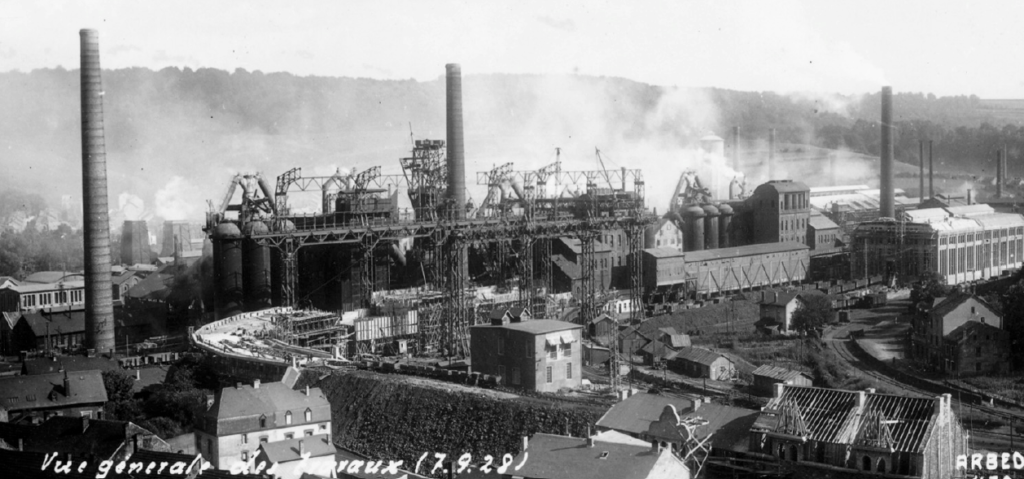
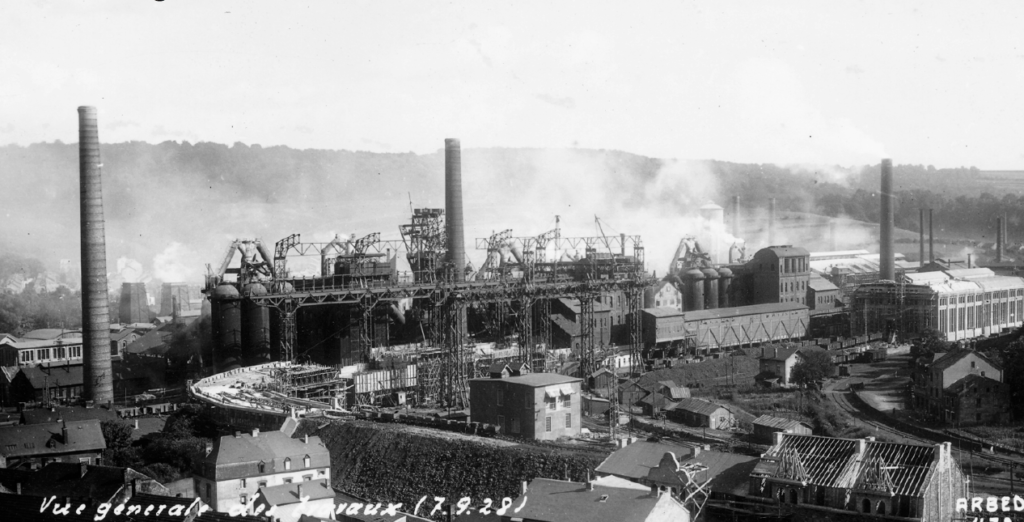
View on the steel mill in 1928, that occupied the area of ‘NeiSchmelz’. Source: City of Dudelange, 2017.

Rationale for action

Because of its size, the ‘NeiSchmelz’ brownfield development poses significant challenges for the existing energy network. This would need to be extended if not complemented with new production facilities. As infrastructure investment significantly increases the cost of such projects, an alternative solution was needed.

‘NeiSchmelz’ was therefore planned as an eco-district. Renewable and carbon-neutral energy will be produced on site, i.e. not relying on fossil resources to supply electricity or heat. There are no centralised renewable energy production facilities in the area, so future energy in the district must be produced on site.

Planners had to develop an energy concept that relies on different energy sources. These will be photovoltaic installations (roofs and open ground) as well as the first deep geothermal drilling in Luxembourg. However, being the first in Luxembourg to drill 2,000 meter down, experience is scarce and the viability and potential had to be determined first.

Objective

Deep geothermal drillings are costly and innovative measures require intensive scoping-studies and test drilling to investigate whether this energy source is financially viable.

The potential for geothermal energy around ‘NeiSchmelz’ is significant. This has led to further investigation to assess drilling for heating in the district.

A first study on geothermal potential in Luxembourg was a doctoral thesis at the German Research Centre for Geosciences and the Luxembourg Geological Service between 2010 and 2015. A more concrete feasibility study included several drillings to test technical details and feasibility.  

https://www.youtube.com/watch?v=vwnVbT8rE2k
Video of the ‘NeiSchmelz’ project from the National Fund for Housing ‘Fonds du Logement’, 2021.

Time frame

The first energy concept for the district was developed in 2014. In 2015 important geothermal energy potential in ‘NeiSchmelz’ was identified. A new energy concept was developed in 2017 building on geothermal energy as a primary source for heat. A feasibility study between 2017 and 2019 determined the potential in greater detail.

Key players

The driving force behind the district and the energy concept is the City of Dudelange. It approves the energy concept and the land-use plan as well as following up on implementation of the measures. The district is being developed in cooperation with the Luxembourg Ministry of Housing and the national fund for affordable housing ‘Fonds du Logement’. The Luxembourg Ministry of Environment and its energy department is also a key player for developing and realising the districts’ energy concept. The City of Dudelange can thus rely on the support of national institutions in developing and implementing the plans.

Implementation steps and processes

With little experience of deep geothermal drillings among the involved institutions, preliminary investigations were required. A feasibility study measured the geothermal energy potential including test drillings of 300 to 400 meters between 2017 and 2019 in the area of the future district. The feasibility study determined that deep geothermal energy could supply the entire district with heat. At 2,000 meters temperatures of 70° to 80° Celsius yield enough heat to supply the district with hot water.

Required resources

The preparatory analysis including the feasibility study and test drillings cost about half a million Euros. This was co-funded by 40 % from the Luxembourg European Regional Development Fund (ERDF) programme. The total resources planned for deep geothermal drilling is unknown.

Results

‘NeiSchmelz’ will be equipped with a district heat system powered by a centralised geothermal energy plant. In conjunction with photovoltaic installations and near-surface geothermal energy, ‘NeiSchmelz’ will be an energy self-sufficient development.

Experiences, success factors, risks

Geothermal energy is new to Luxembourg and knowledge of potential, techniques, feasibility and economic viability are still scarce. In developing the concept and the feasibility study, cooperation between specialised players is key to ensuring that knowledge is institutionalised. This will help when implementing similar projects in future.

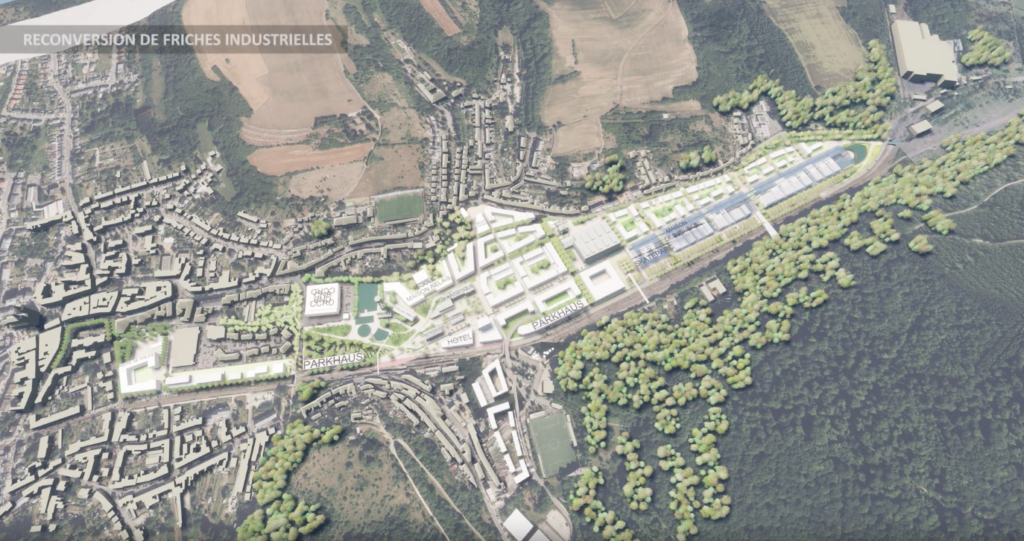
Urban development concept for the ‘NeiSchmelz’ district. Source: City of Dudelange, 2017.

Conclusions

Geothermal energy means the heat for all ‘NeiSchmelz’ will be from a renewable energy source. In conjunction with extensive photovoltaic installations, the district will have energy self-sufficiency and be a zero-carbon emissions district. As such, it is the first in Luxembourg, offering important experience for future large-scale brownfield developments in the country.

Contact

Mr Patrick Hoss, Director of the ecological department of the City of Dudelange: patrick.hoss@dudelange.lu

References

Tageblatt, 2018: Newspaper article on the planned use of geothermal energy in Dudelange (in German): https://www.tageblatt.lu/headlines/das-heisse-potenzial-von-duedelingen/

City of Dudelange, 2019: Chronology of the development of the brownfield development ‘NeiSchmelz’ (in French): https://www.dudelange.lu/fr/projets-urbains/projet-neischmelz

Blog CIPU

‘Belval’ – Transforming a former steel mill into a new urban district

>

The south of the country of Luxembourg has a strong industrial heritage. During the 19th and early 20th centuries, the area was home to a large steel manufacturing sector. Due to direct access to iron ore, the steel industry predominantly settled nearby. Steel mills were built next to existing settlements, attracting workers from Luxembourg and abroad, gradually transforming villages into cities.

The steel crisis in the 1970’s prompted an economic re-orientation. The decline of the steel industry and its production sites led to a period of difficult economic transition. Nevertheless, the vacant steel production sites in direct proximity to city centres would prove valuable for the future.

To support alternative economic sectors and to address high demand for offices and housing, these brownfield sites are steadily being converted into urban districts. The ‘Belval’ reconversion project is the first development of its kind in Luxembourg, converting the former steel production site into a new urban district.

Rationale for action

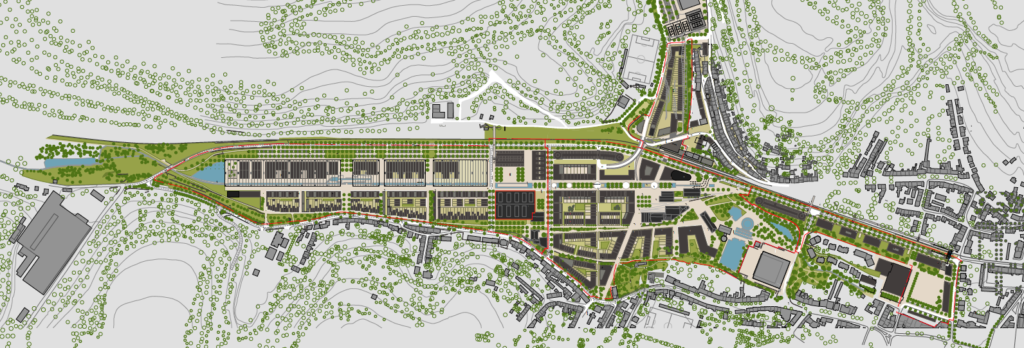
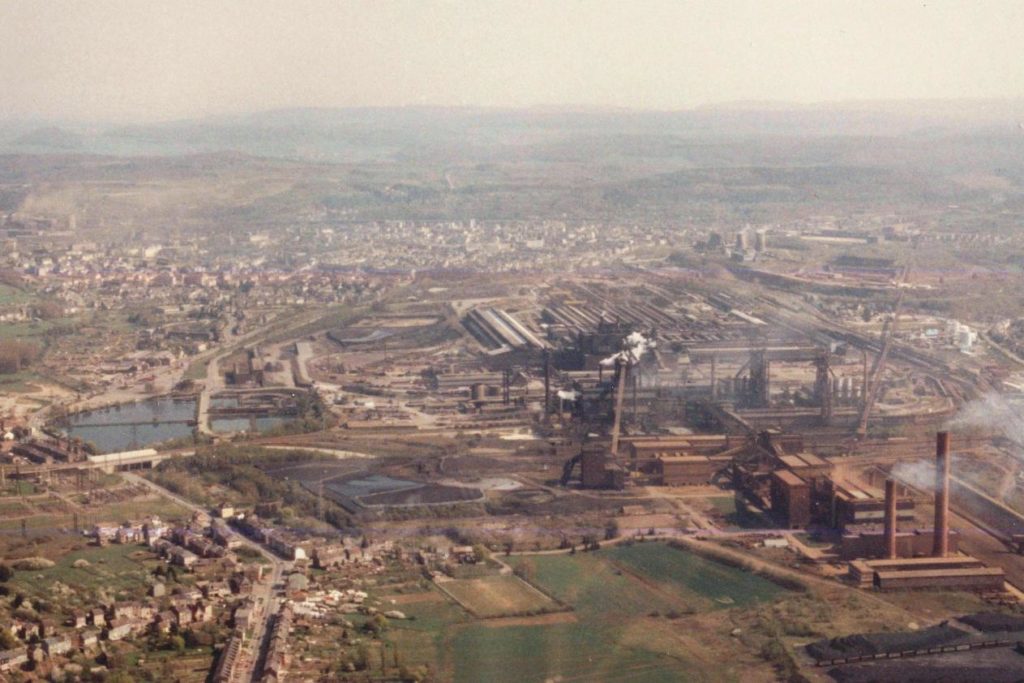
The ‘Belval’ site is shared between the city of ‘Esch-sur-Alzette’ and the municipality of ‘Sanem’ in the South of the country. In 1997 steel production finished, leaving a 120 hectare idle industrial site next to the two centres that risked being left vacant. Developing the site would provide potential for decentralisation, an objective mentioned in the national planning strategies.

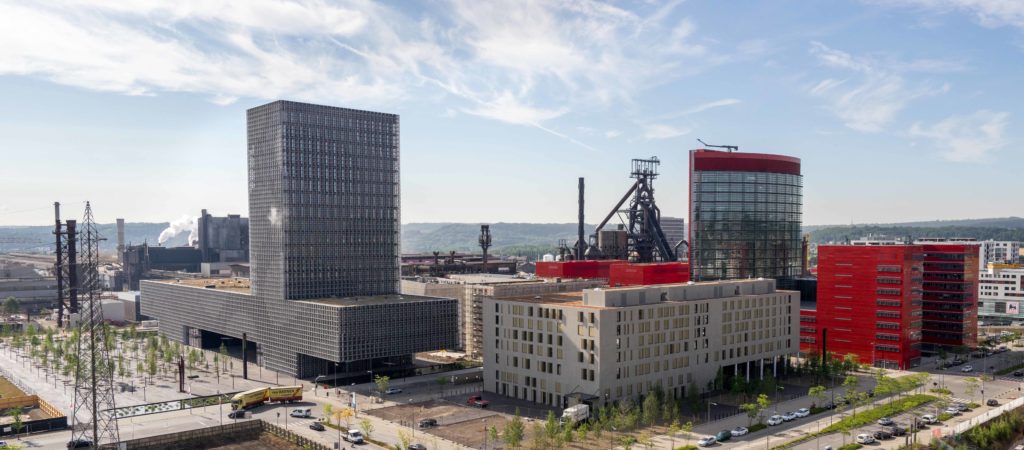
The ‘Belval’ site before closing of the steel mill in 1991. The large production halls in the background are still operational to this date in 2021. Source: Les Meloures, Wikipedia.

Objective

This triggered the development of ‘Belval’ from a brownfield site into a new urban district. The site should provide office space and housing attracting businesses, inhabitants and employees, supporting and strengthening the economy of the region. Developing ‘Belval’ should also support the government’s decentralisation policies, developing a second growth pole in addition to Luxembourg City, reinforcing a more balanced territorial development.

Initial plans for developing the steel mill into a new urban district were made a year prior to its closure. Accommodating businesses, new inhabitants, a university and a concert hall, the area was planned as an urban and independent district of the municipality of Sanem and the city of Esch-sur-Alzette. The masterplan puts special emphasis on the creation of knowledge economy businesses, encouraging specialisation in knowledge-intensive sectors. Sustaining and valorising the area’s architectural heritage should create a special identity for the district and a reminder of the industrial past.

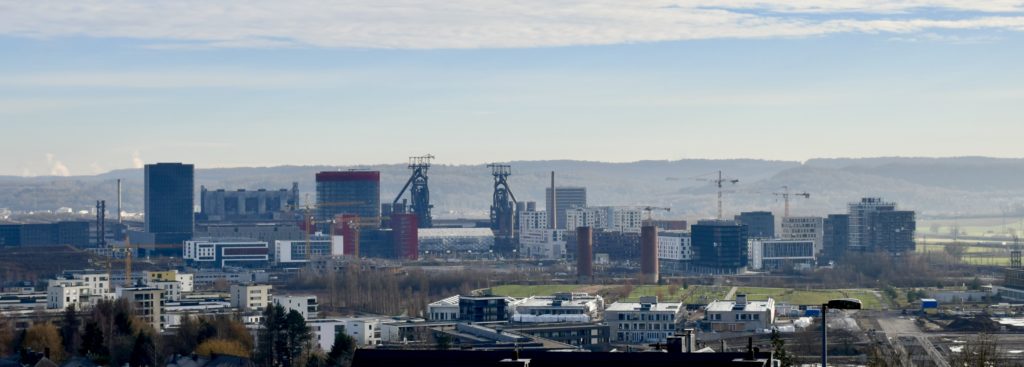
Panoramic view of the Belval district in 2019 with ongoing works. Source: Zinneke, Wikipedia.

Time frame

First efforts to develop the area into a new urban district started in 1996. The masterplan was adopted in 2002. Development is still ongoing, with about 50% of the buildings completed by 2019. Development should be finalised by 2028.

Key players

Development was entrusted to two intermediaries, that were specifically founded for this purpose. The first and primary intermediary, AGORA, is a public-private organisation encompassing the steel company (the former landowner) and the state. The organisation is in charge of developing and commercialising the new district and benefits are shared equally between the two members. The second intermediary is the ‘Fonds Belval’ (Belval Fund), implementing the public investment programme. So, the public institution is in charge of building, approving and managing the buildings as well as public infrastructure such as the university complex and the museum.

Many public bodies were involved in the process with ministries and municipalities in supervisory and consultancy boards, the national railway for traffic planning and the municipalities having their final say on development through land-use plans and building permits. Private investors are also implementing non-public buildings in ‘Belval’.

‘Place de l’Académie’ in Belval. Source: Zinneke, Wikipedia.

Implementation steps and processes

There are several important implementation steps for the development. A key one was the foundation of an ‘ERSID’ (grouping of economic interest) in 1996 as an intermediate institution. It launched a pre-study, investigating the potential to convert the brownfield site into a university pole. Steel production in ‘Belval’ was halted in 1997 and the land was transferred for a symbolic price of EUR 1 from the steel company to the state.  

Another key step was the foundation in 2000 of AGORA to implement the project. Developing public installations, as detailed in the masterplan adopted in 2002 was ‘Fonds Belval’, founded the same year.

Construction started in 2004 and the first buildings were completed soon after (e.g. a concert hall ‘Rockhal’ in 2005, first office buildings in 2006 and a shopping mall in 2008). ‘Belval’ welcomed the first residents in 2009. The university and research institutes opened their doors in 2015. Today, the development of ‘Belval’ is not yet finalised with less than half of the planned buildings still to be realised.

Required resources

As ‘Belval’ is still under construction and far from being finalised, it is not possible to assess the resources required for the development. ‘Fonds Belval’ indicated in its annual balance sheet of 2017 a budget of EUR 614 million for construction and related services.

Results

Today, ‘Belval’ is an urban district, hosting many important national functions. The university, research institutions (e.g. Luxembourg Institute of Socio-Economic Research), banks and large service providers are all in the new district. A total of 180 business institutions, retailers and restaurants have opened providing labour for 5,000 employees. The site also hosts amenities such as a concert hall, a shopping centre and a museum, as well as 2,400 permanent residents.

‘Belval’ is the economic motor of the south, highlighting the economic rationale for developing the district. With more employees and residents to be welcomed in future, its economic role is expected to increase.

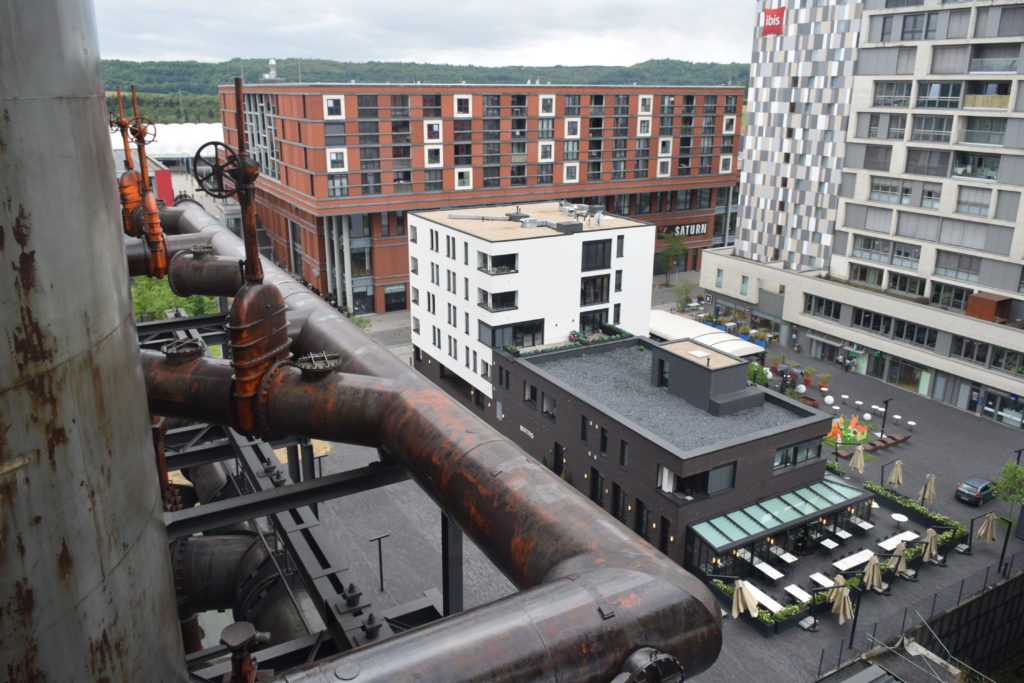
The area features modern architecture, integrating innovative building forms and techniques. Meanwhile, the industrial heritage was preserved in the form of two high furnaces and their related infrastructure that function today as a museum. Despite the high density of offices and housing, ‘Belval’ has large public spaces, squares and pedestrian zones.

View of the University with the former high furnace in the background. Source: © Michel Brumat / Foersom sàrl 2015

Experiences, success factors, risks

The specifics of brownfield developments mean many non-standard solutions have been required. ‘How to deal with soil contamination?’, ‘How to integrate industrial heritage into the urban development concept?’, ‘How to build an urban area from scratch and how to make the district function with far more employees than inhabitants?’ and ‘How to make the retail sector function with a small number of potential customers?’ are just some questions that had to be addressed during development.

Maybe because of the uncertainties and the steep learning curve for planners and decision-makers, realisation of ‘Belval’ continues. If everything goes as planned, the district will be finalised after more than three decades, having stretched across the entire careers of some decision makers and planners.

The planning process is very often taken as a prime example for a top-down process, overruling local citizens and decision-makers. This perception is rooted in the limited involvement of potential citizens and local authorities in the conception and realisation of the site. The masterplan also featured little flexibility to address problems and issues arising during its realisation.

Successful integration of the industrial heritage into the urban design. Source: Zinneke, Wikipedia.

Conclusions

In 2021, 25 years after the brownfield conversion was launched, the development has not been finalised. With about ten years of development to come, it is too early to draw final conclusions on whether the development has worked or not.

Despite criticism in recent years, views on ‘Belval’ have started to change. The relevance of ‘Belval’ for economic development of the south, the large number of businesses and the urban design of the existing district are positive. Slowly but steadily, ‘Belval’ fulfils the purpose for which it was designed, as the new centre of the knowledge economy in Luxembourg.

As a result, the name ‘Belval’ is known by individuals in and outside of Luxembourg. The sheer size, the many issues planners had to tackle and the fact that ‘Belval’ is the first reconversion project in Luxembourg have increased the projects’ visibility. The area is also a testbed for future developments of brownfield sites in the south of the country.

Contact

Ms Daisy Wagner, Chief planner of the city of Esch-sur-Alzette: daisy.wagner@esch.lu

References

AGORA, 2019: Website about the Belval project: https://www.belval.lu/en/

AGORA, 2019: Website of the association: https://www.agora.lu/en/

Fonds Belval, 2019: Website of the fund: https://www.fonds-belval.lu/

Blog CIPU

NeiSchmelz in Dudelange: a large-scale industrial brownfield development

>

The south of Luxembourg is marked by the heritage of the steel industry and mining. Large active and inactive industrial sites next to urban centres remind residents and visitors of the peak of heavy industry. Located in the south of Dudelange city centre, the Schmelz district was home to a steel mill until 2005. The 40-hectare site is now undergoing a major brownfield reconversion project.

Rationale for action

Following the steel crisis in the 1970’s, more and more steel mills closed. Since then, the ongoing structural change has also affected Luxembourg’s south. In 2005, the former Schmelz steel mill was closed, which created a 40-hectare industrial brownfield site next to the city centre. The municipality saw the opportunity and kick-started a process to convert the site into a new urban district.

Schmelz district during early 20th century. Source: City of Dudelange, 2019.

Objective

The central objective of the NeiSchmelz project is to construct a new district with housing, commercial and cultural areas connecting the districts of Italie and Schmelz to the city centre. Preserving the heritage of heavy industry is particularly important for the municipality. Therefore, the municipality intends to maintain the former industrial character, by preserving industrial artefacts such as the water tower and the floor plan of the factory buildings.

NeiSchmelz will offer approximately 1 000 new housing units. The new district should be multifunctional, mixed and attractive also for locals. By involving the Housing Fund (Fonds du Logement) in the development, housing will also be available for prices below market value, which will further promote a social mix.

The new district will have easy access to Dudelange city centre, to surrounding districts, to green recreation areas and to the national traffic infrastructure. In addition to existing railway lines for example, there will be new traffic infrastructure within the new district and towards the surrounding areas (pathways, bike lanes, roads).

Time frame

The development started in 2008 and is ongoing (2021). The participatory phase started back in 2009 and the interim use concept was developed in 2011. A decontamination study and negotiations between the steel company (Arcelor Mittal) and the state were finalised in 2016. Since then, urbanistic concepts are being developed and implemented.

Key players

City of Dudelange, Housing Fund (Fonds du Logement), Luxembourg state functions (environment and water management administration, public roads and bridges administration (all under the Ministry of sustainable development and Infrastructure), CFL (national railway company)), Luxembourg EcoInnovation Cluster, developers, architects, civil society (community and social enterprises) and private developers.

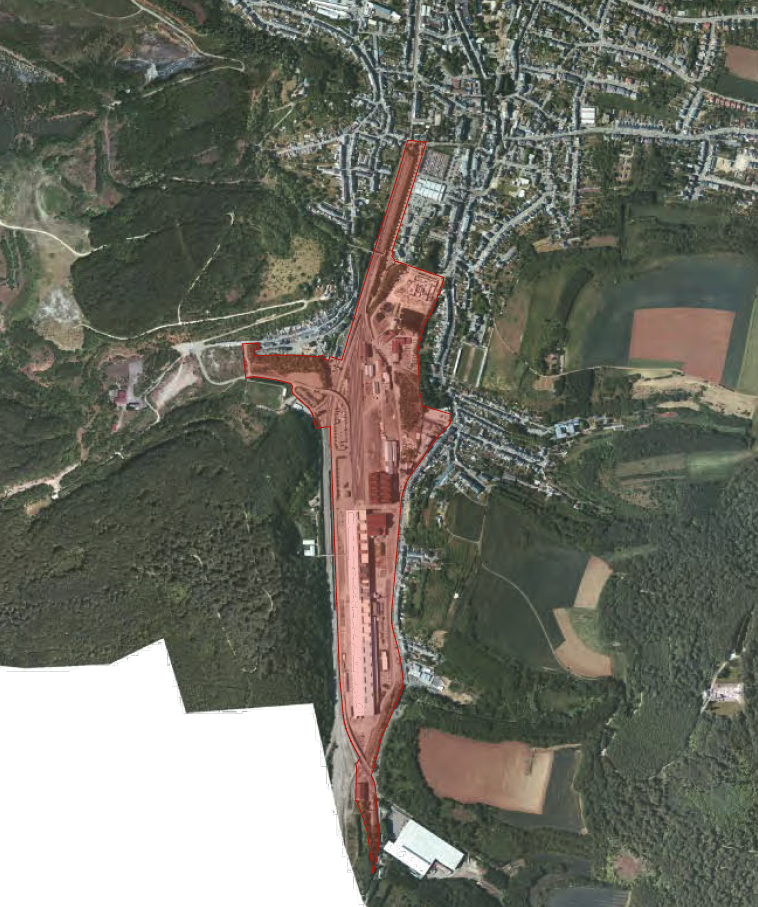
Positioning of the NeiSchmelz district in relation to Dudelange centre (in the upper half of the picture). Source: City of Dudelange, 2019.

Implementation steps and processes

After the former steel mill closed in 2005, the municipal administration issued a call for proposals in 2006 to gather ideas for future use of the site. In 2008, there was a decision to create a new urban district with a focus on housing. A national call for development proposals was launched in 2009. In 2010, the NeiSchmelz proposal was awarded and planners were contracted to develop the master plan for the district. In parallel, a concept to decontaminate the area was elaborated. In the meantime, an interim use concept was initiated and the master plan was finalised in 2012. Negotiations between the steel company, who owned the site, and the state finished in 2016, transferring ownership of the site to the state-owned Housing Fund.

Alongside implementation, a participatory process involving the public was organised. From 2009 to 2016, local residents and interest groups could incorporate their ideas for the interim use and final state of the conversion. This was achieved through information campaigns, multiple consultations and workshops. Presentations of the project highlight changes introduced through the public consultation procedure to illustrate to citizens how their contribution has influenced the project.

In order to develop the site, the municipal land-use plan (PAG) had to be changed. For the technical implementation, the city will rely on four so-called PAP (partial land-use plans). These act as building permits and were submitted for approval in late 2017.

Required resources

Since the project is implemented stepwise, the required resources cannot be specified. A key aspect for the project, however, was the acquisition of the site from the steel company.

Results

So far, there are few results of the conversion project. 1 000 new housing units will create living space for around 2 000 new residents. Additionally, there will be new commercial areas as well as public and semi-public areas for social and cultural exchange. A large area in the centre of the district will be for businesses, targeting start-ups and innovative enterprises. Building permits, in the form of partial land use plans for the new district were submitted for approval in late 2017 and approved in 2019.

Aerial view of the future district. Source: Fonds du Logement, 2019.

Experiences, success factors, risks

Reconversion provides the opportunity to bring new types of land use into an urban area. NeiSchmelz creates a new residential district with businesses and public spaces. At the same time, the project illustrates how cultural heritage from the steel industry can be preserved while changing the usage of the site.

This industrial reconversion is a large-scale project that benefits from multi-level governance arrangements. In particular for the negotiations with the globally acting industrial companies, it was important to involve a national player.

The project is similar in size to other conversion projects in Luxembourg. For most of these projects, the sheer size in relation to the immediate surroundings and existing urban fabric poses special challenges for planners and architects.

Conclusions

NeiSchmelz illustrates that participatory processes, if implemented thoughtfully, have an impact on the length of a planning process. Participation, however, is key to acceptance of the new project and should thus represent a central pillar in the planning process. A good project requires effort and time.

Contacts

Ms Eva Gottschalk, Chief planner of the City of Dudelange: Eva.Gottschalk@dudelange.lu

References

City of Dudelange, 2021: project website: http://www.dudelange.lu/fr/projets-urbains/projet-neischmelz

City of Dudelange, 2013: participation report: http://www.dudelange.lu/fr/Documents/2013_Neischmelz-Rapport.pdf

up to top